Stomach pain

Note to reader: this is a narrative written by Shey in the days following Anicka’s hospital visit as a form of processing what happened. It has not been edited, and remains true to the feelings at that time. 

March 19, 2023

We were planning on taking a trip to some nearby ruins today. Anicka was feeling unwell this morning and encouraged me to go without her. Luckily I did not. Within a few minutes of deciding not to go, she was drenched in sweat and vomiting with severe abdominal pain.

We belong to an expatriate/migrant Facebook community where people ask every question imaginable and share info. So I quickly looked there to figure out where people go to the ER here in Oaxaca. Many recommended San Lucas Hospital ER.  Anicka struggled to stand and walk due to her pain, but together we made our way out of our apartment and down the cobblestone street to a busier road. Anicka sat on the curb in pain while we waited for a taxi to drive by. Luckily we got one within about 2 minutes and thankfully, our driver got us there quickly for only 70 pesos- about $3.50. 

The hospital waiting room had 3 people sitting together and one front desk staff who took her name and date of birth. A nurse took Anicka’s vitals and we met our young doctor: Doctora Ana Elisa Davila Ruiz. We are only about a month into our Spanish school and although we do pretty well with ordering food and other daily tasks, medical terms and communication is still not within our comfort. Luckily Dr. Davila Ruiz spoke excellent English, which really helped us feel more comfortable. 

There were some problems starting an IV and unfortunately, pain management is not prioritized here. Our doctor told us directly, “We don’t give the strong pain meds they give in the United States.”  This is very different from what I saw during my time as a PA student training in ERs and hospitals in the US. Anicka, being a quiet person, was suffering and in a lot of pain but it took a long time and many requests to get the pain meds. She had beads of sweat all over her forehead and a grimace on her face. The cold IV fluids made her shiver with chills. She kept asking me, “When will they help the pain?” It was a struggle to walk the line between being assertive for her and trusting that the medical team would provide appropriate care. Mostly I held her hand and tried to be reassuring as she gripped it in agony over and over.  I texted her family and she also asked me to contact Mark.  I prayed for her body to ease the pain and I cried a little with fear. 

After about an hour, her pain seemed to be eased slightly and she rested a bit. She would still stir every few minutes and tell me she was still in pain. A bit later, the ultrasound doctor, Dr. Martinez Gonzalez arrived and was able to check her abdomen. He found that she had a right renal stone and significant inflammation in that area. Luckily, her gallbladder and appendix did not appear inflamed. Her labs were also reassuring.  We were discharged with a prescription for flomax, an NSAID, and a muscle relaxer and paid about $330 to the hospital and $125 to Dr Martinez Gonzalez.  I noticed he was wearing baseball pants under his labcoat and asked him about it; he told me he had come from a game with friends to help Anicka.  We have travel insurance which will hopefully cover some of the charges, but it still feels very reasonable, especially compared to what we would have paid in the US healthcare system.

Our taxi driver took us to the pharmacy and the medications were filled within about 3 minutes. They do not fill a bottle with your name on it here- they just give you a box with the appropriate dosage and patients have to read directions from the prescriber. I also bought 10 tabs of tramadol 50 mg (a pain med somewhere between an NSAID and opiate) without a prescription for 31 pesos ($1.50).  Our driver asked the nature of Anicka’s maladie and advised jugo de pina (pineapple juice). He said it would clear it quickly and punched his fist in the air-we were both convinced.  Anicka is working on drinking lots of fluids and eating, as well as watching some Netflix in Spanish. Tylenol went a long way to help with the pain and she hasn’t needed any other pain meds yet. We bought a couple pineapples from the neighborhood market and she is drinking the jugo de pina. 

A few weeks later:

Anicka continued to recover over the next few weeks. The pain was mostly gone, though occasional stabs did still happen on seemingly random occasions. Because of this, and because there was no sign of the stone leaving her body, she made an appointment with the urologist and was able to get a second ultrasound. The urologist didn’t see a kidney stone, but recommended a CT scan for more detailed imaging to be sure it was gone. After another two weeks of debating, Anicka did get the scan just to confirm there wasn’t any remnant of a stone. Somehow, some mysterious way, the 9 mm stone disappeared and Anicka is, we hope, at this time still stone free. She is working on making sure she drinks plenty of water in this dryer, hotter climate to avoid the recurrence of another stone in the future. If you ever experience a kidney stone and want support and validation, Anicka is here for you, though she doesn’t wish it on anyone.
Jungle Adventures

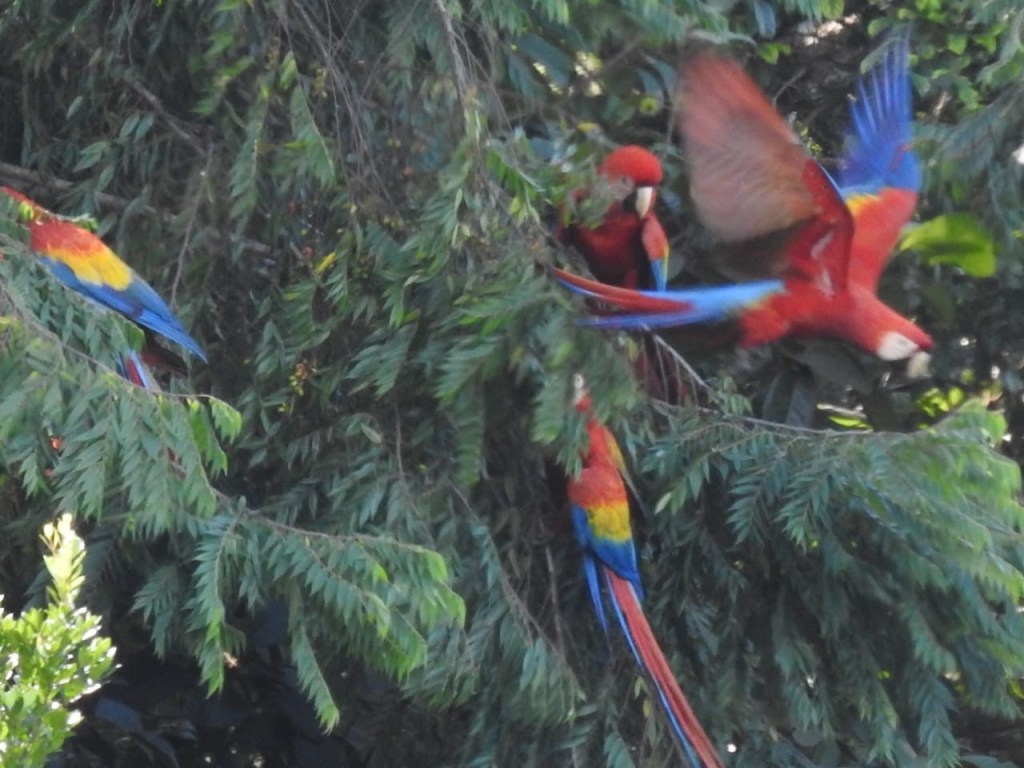
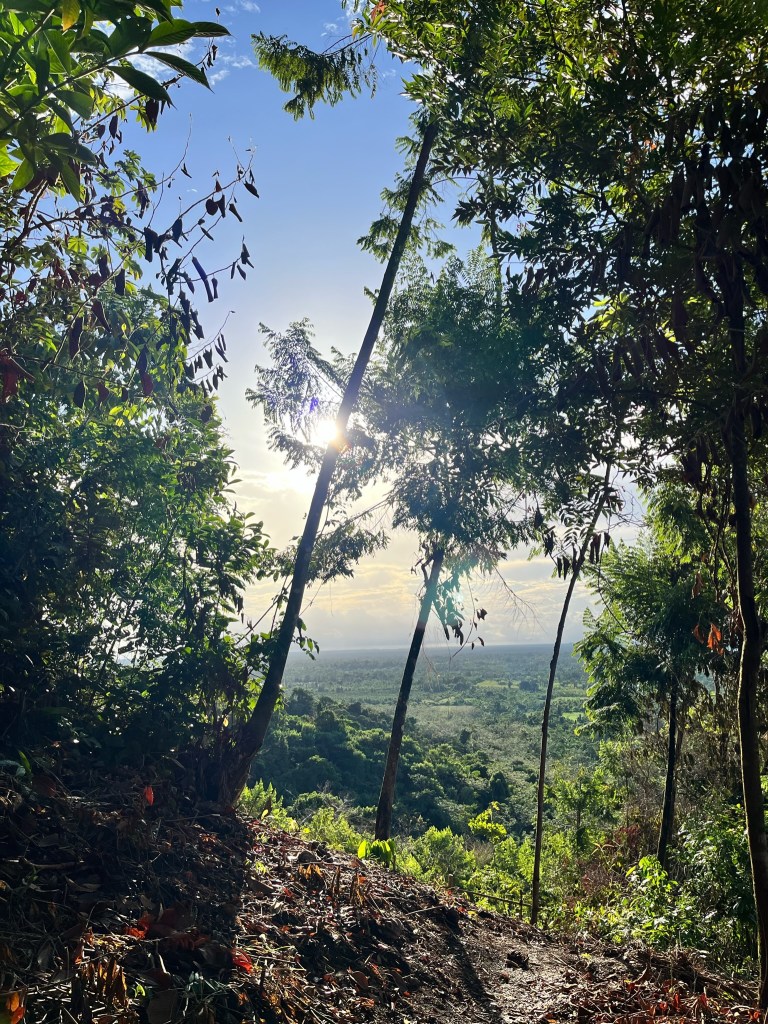
The top of our first climb, a Macaw feeding area

January 27, 2023

We woke up early our first day in Hopkins and headed toward the jungle in the dark and rain. As the sun rose, the rain eased and we saw the morning routines of the Belizean people. Many people bicycle to their school bus and to work. They carry all their tools- chainsaws, machetes— and big bottles of water with them while bicycling. We also saw Old Order Mennonites driving their horse drawn carts to sell fruit and veggies at busy junctions. We reached the town of Red Bank and met Raul, our guide to see the scarlet macaws. We are a bit later than he had suggested and so he was antsy to head out. We followed him on his motorcycle in our Escape to a trailhead. We were beginning to trust our well-traveled vehicle, despite the sounds in made as we went along the red dirt road.

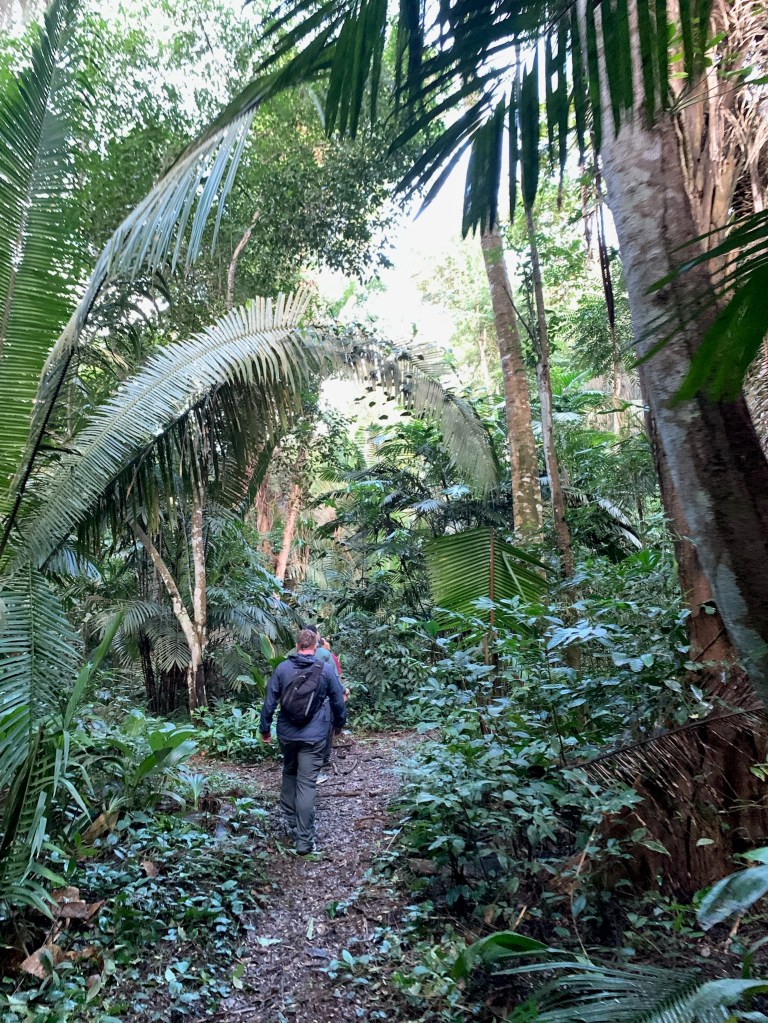
Following our guide, Raul, into the jungle to see the Scarlet Macaws.

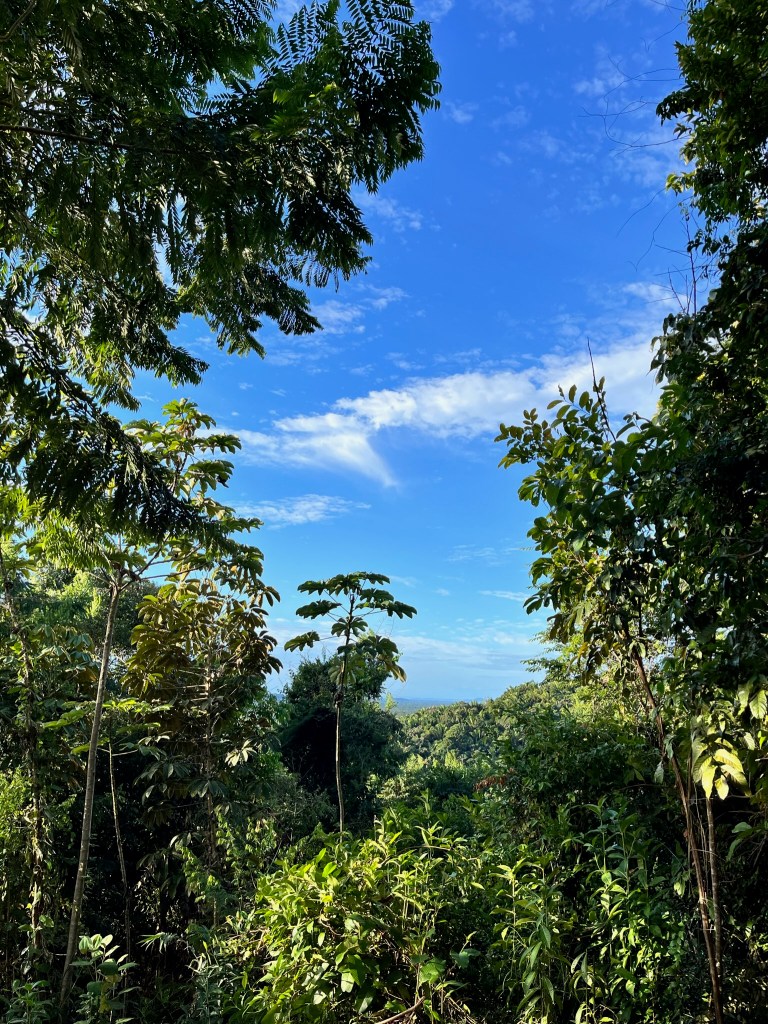
Raul simply asked us if we would be ok with walking in the flat jungle, then climbing. We agreed and at about 7am followed him into the lush, green tangles of the rainforest. Raul navigated along an interwoven network of trails through the warm, humid forest. We saw a tapir track, heard toucan, and marveled at the industrious leaf cutter ants, carrying their tiny green triangles up the steep slope.

Up, up, up we followed Raul. After 20-30 minutes of hiking, we started hearing the harsh calls of the scarlet macaws. We came to a clearing where an older couple and an older guide was watching. They smiled and left a few minutes after we arrived. I felt disappointed: worried that we had missed the birds. Raul reassured us that we had a few hours to look for them as he handed us binoculars.

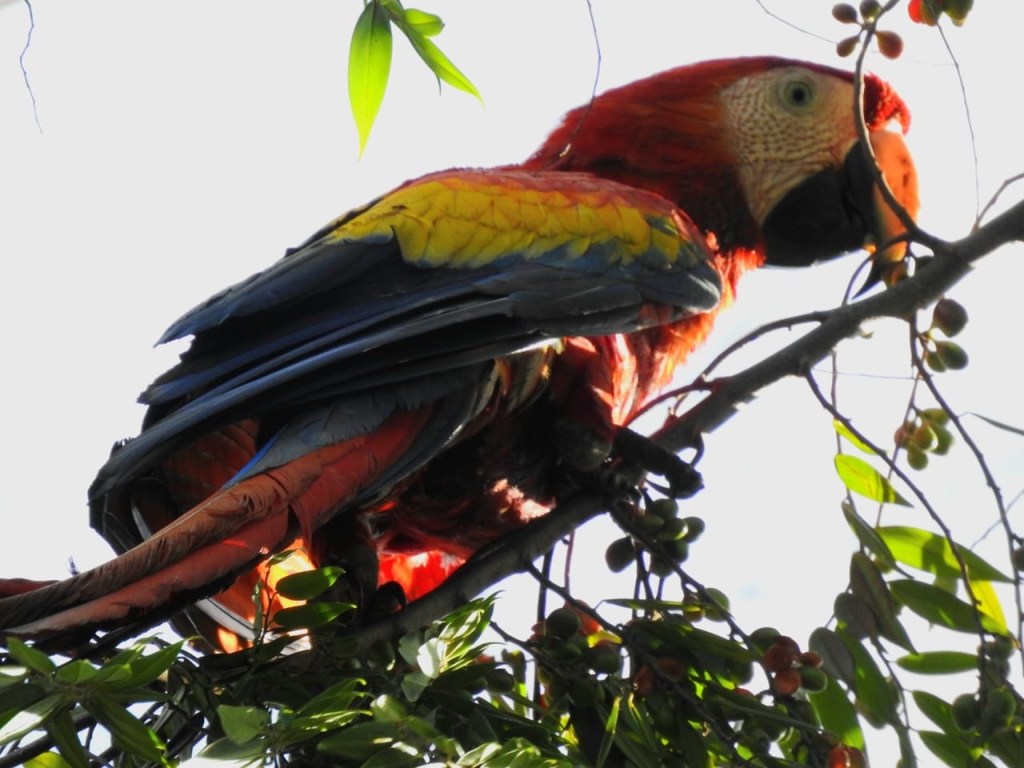
About 300 scarlet macaws live in western Belize. Many of them feed and mate in the early spring near Red Banks, then go deeper into the Jungle at the Belize-Guatemala border to rear their young. Poachers pose the biggest threat to the population: they climb up and steal eggs, then incubate them, hatch the birds and sell them into captivity. Sometimes, guides like Raul or others interested in protecting the birds go and camp under the trees to protect from such plunder. They are prized for their colorful feathers, which ancient Maya rulers used in ornate headdresses. You can tell the age of the scarlet macaw by the skin around their eyes- just like for us, it get wrinklier with age. Macaws live up to 50 years in the wild. The males and females have the same coloring and they weight only about two pounds, despite being three feet long and having a wingspan of the same length.

The skin around the eye indicates age. Those little berries are what they are eating in the trees.
Photo credit: Raul Tec

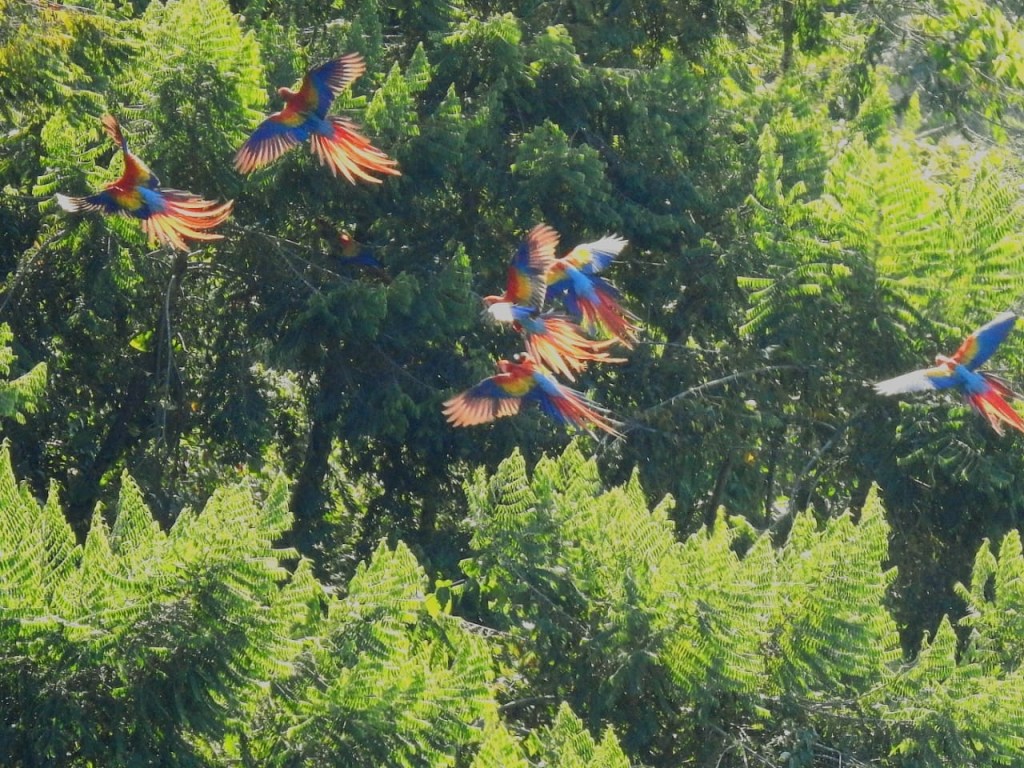
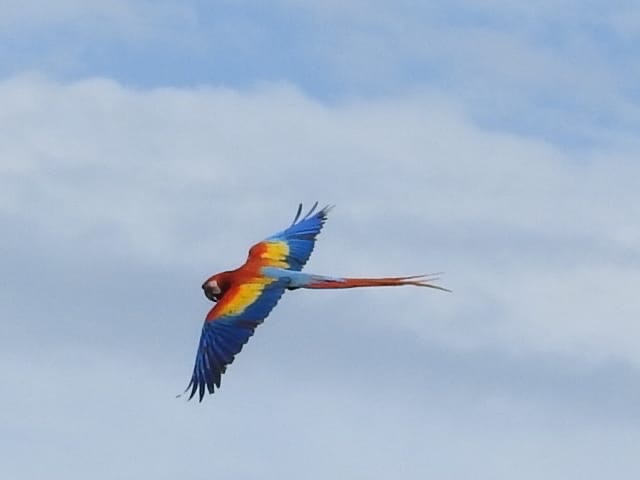
Over the next few hours, we would listen for the cawing, chase them to where they landed and watch them. Then repeat. Raul’s passion for the birds inspired us all to run behind him up and down the trail. It was very thrilling to see the birds right above us and in flight. When the mating pairs, who stay together for life, would turn and twist synchronously in the air, their colors flashed against the green forest backdrop. It delighted us all. I was surprised at my own amazement.

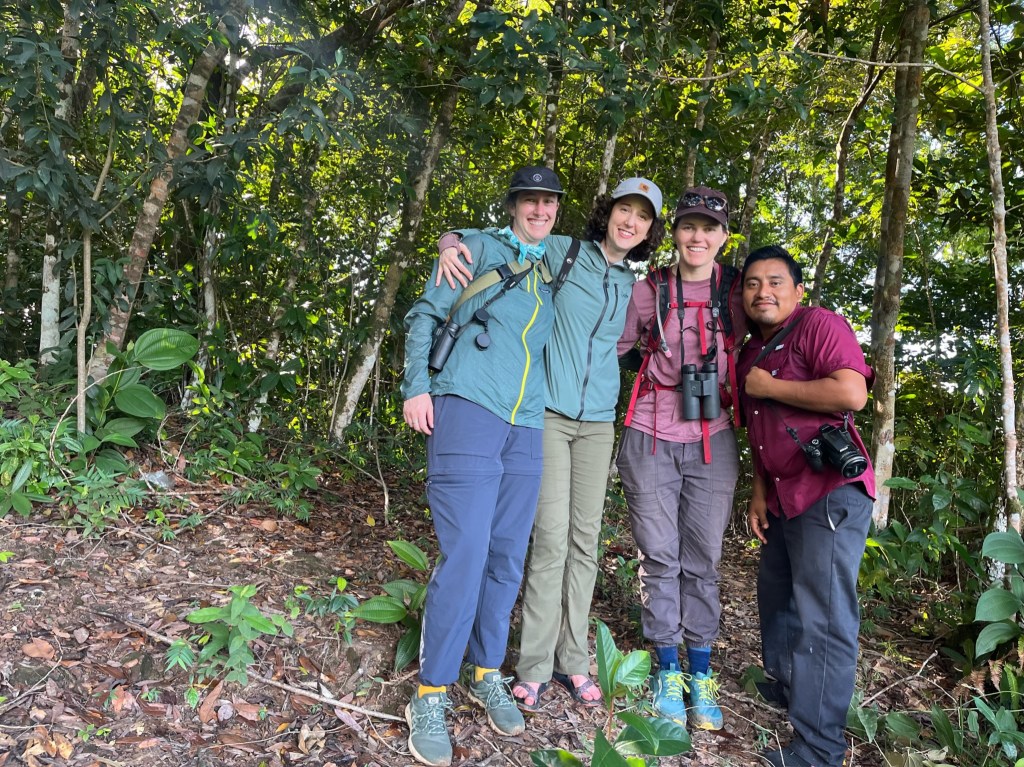
Zoe, Anicka, and Shey with our guide Raul

Raul also told us about the town of Red Bank. Maya people from the nearby San Antonio established it in the 1980s. Some of them farm tubers, like cassava and yam, do tour guide work, or work in a trade. When Belize established a forest reserve nearby, the indigenous Maya people living on the land were forced to move to Red Bank.

As the sun climbed higher, our time in the jungle with Raul and the Scarlet Macaws ran out. We descended to the car hungry and tired. After a quick stop to help push a tourist van, with tiny wheels and tires, out of the mud, we left Red Banks and the macaws.

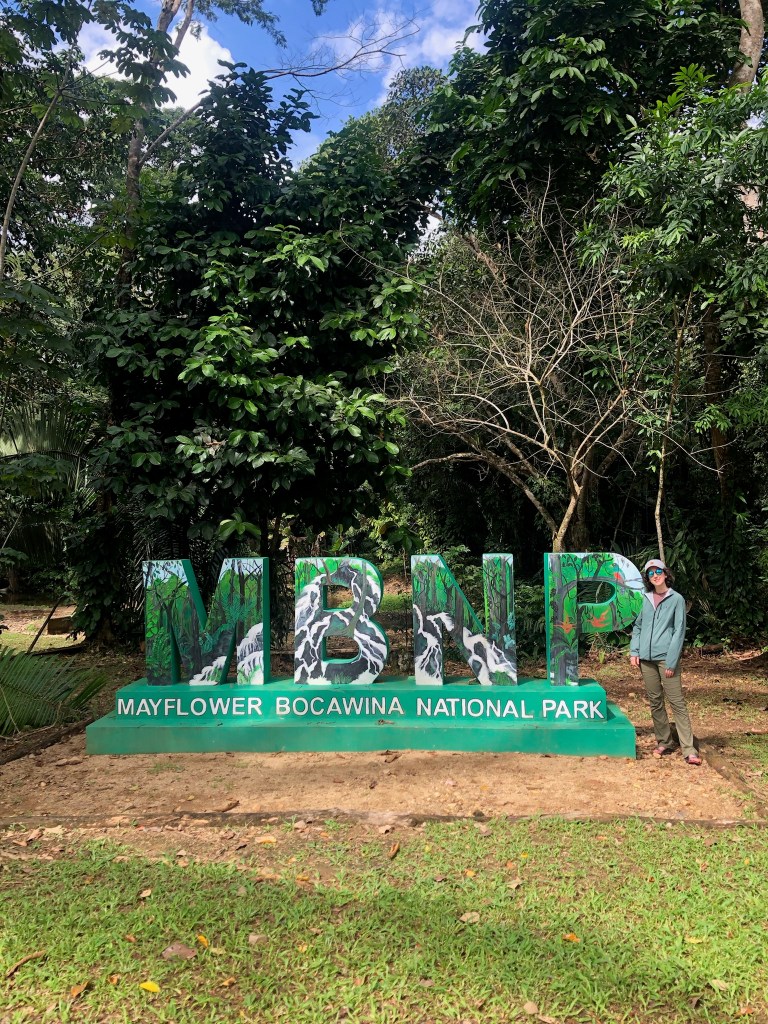
As if one hike wasn’t enough, we decided to head to Mayflower Bocawina National Park to do another. The park ranger oriented us and advised us to watch for two species of venomous snakes including the Mexican jumping pit viper. He sees this snake on a daily basis, he told us. He also showed us three recent botfly bites, bites that turn into larva moving under your skin in about two weeks. Despite initially planning for an easy hike, we couldn’t help but follow the trail towards the “steep” Antelope Falls with his prompting. We were all sweltering in our full body nylon and polyester, trying to prevent getting any botfly bites of our own.

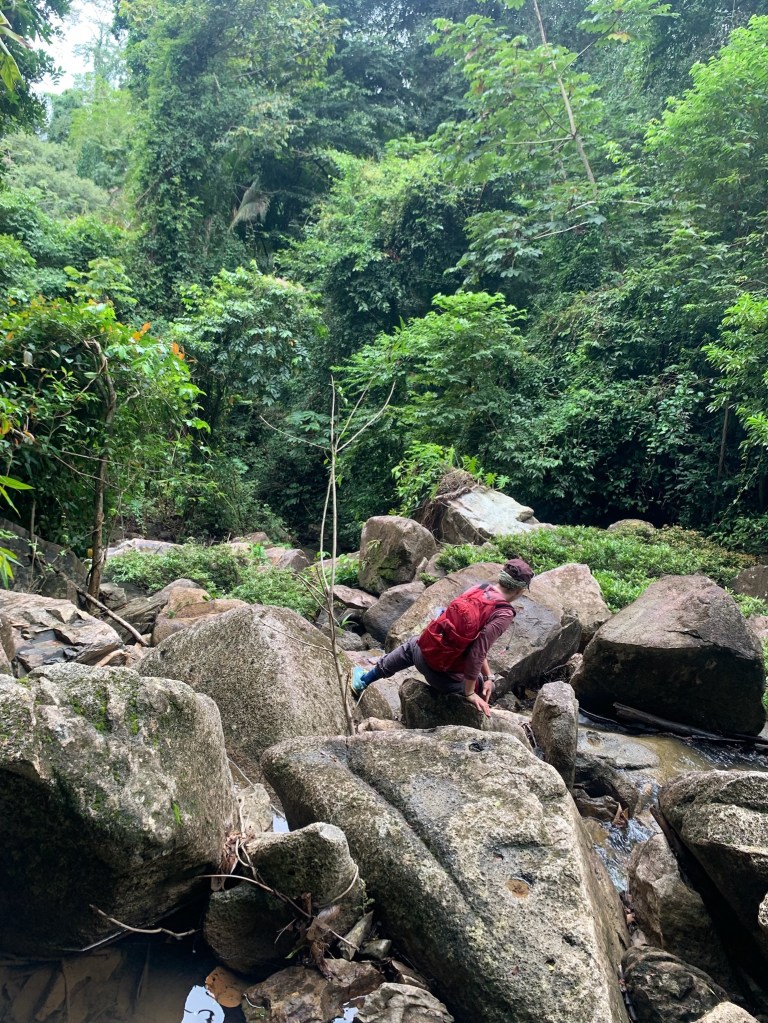
Shey goes off the trail and into the creek in search of a walking stick (shocker). It turned out the ropes were all we needed.

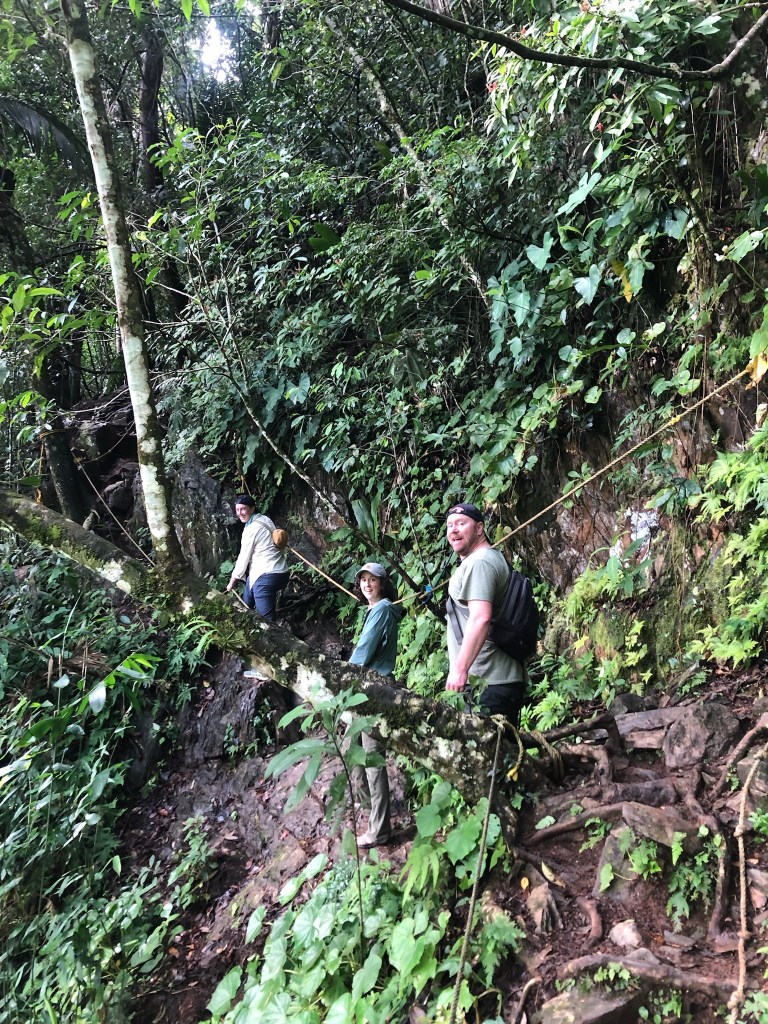
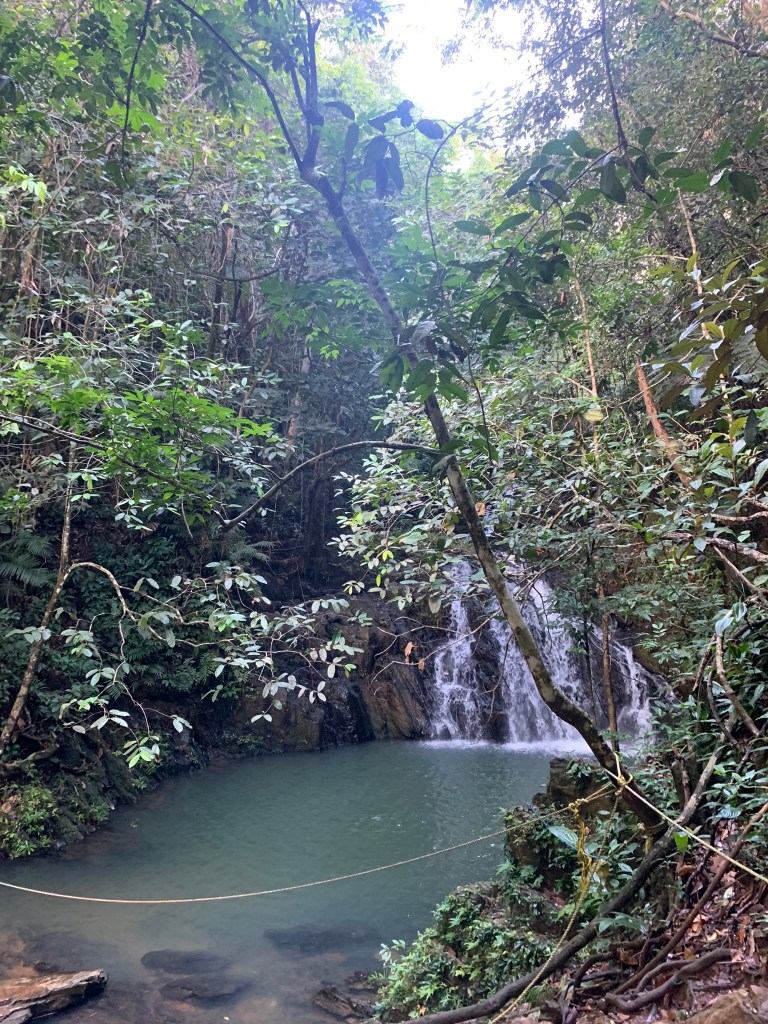
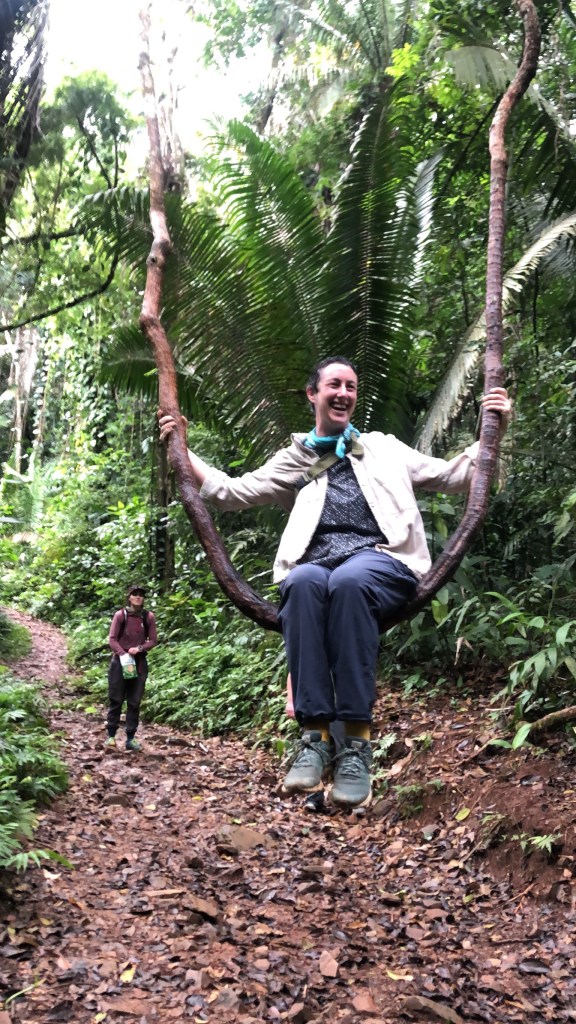
Walking through the lush jungle was an adventure in itself. Huge palms and thick vines were everywhere. We passed a group who had repelled down the falls and they told us, “You still have a long way to go. You are almost to the hard part.” We came to the first falls and were winded, sweaty, tired, and humbled by the view. The next 30 minutes led us nearly straight up, grasping ropes along the trail to prevent falling down the mountainside. We scrambled up and over roots, scooted on our butts, and pulled ourselves over to the top of the waterfall where we found ourselves alone at a natural pool. We were so ready to strip down and jump in, marveling at our surroundings and trying to accept that this is our reality. It was one of the most incredible experiences we had. The water was cool and refreshing and gave us energy to make the trek back down. The climb down, Shey called it the “poor-man’s repelling”. Skip inspired us to take the time to swing on a vine along the way.

Clutching as we climb. Cotton tree roots were one very impressive obstacle as we ascended the trail.
The top pool of Antelope Falls where we swam. Note the ropes.
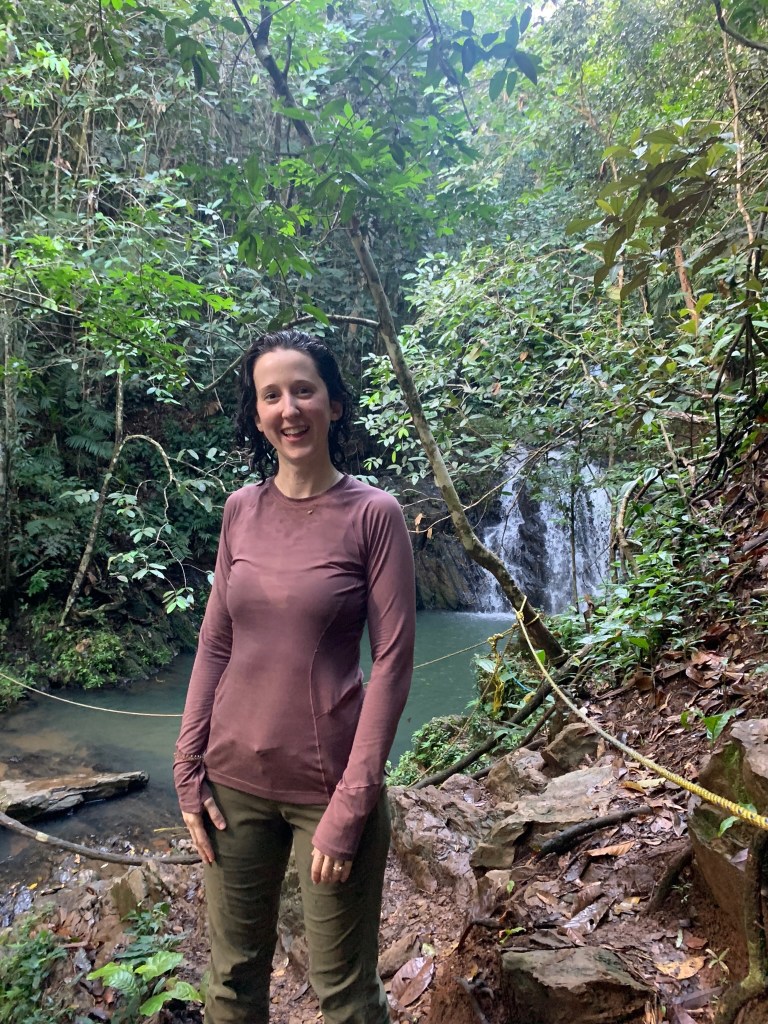
Refreshed after a swim!

We’re still waiting to see who got the first botfly bite, and we will all owe them a drink.

Zoe swingin’ from the vine hanging from the tree tops. Skip had the courage to try it first.

Traveling through Belize

January 26, 2023

Leaving Tobacco Caye meant we wouldn’t have a bell calling us to delicious, ocean-harvested meals three times per day or be surrounded by friendly, familiar faces. All the windward lodge staff gathered at the boat as we piled in with Skip, Zoe, Teri and Kees (pronounced Case (he’s Dutch)).

Our bittersweet departure from Tobacco Caye. Sanchez, on the far right, knocked down coconuts and used his machete to make them into refreshing drinks for us.

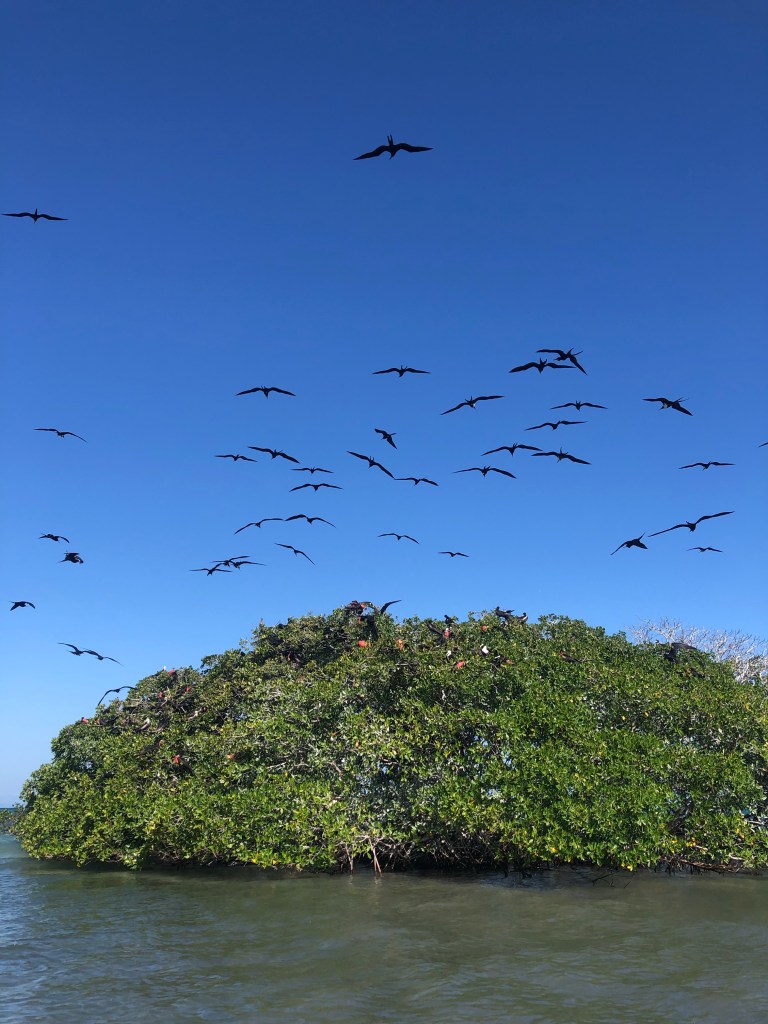
Teri and Kees had a flight to catch but we were still able to make a stop at the new bird island to see one of the few frigate breeding locations in the world. As we approached, frigates circled overhead and they flaunted red balls in the trees. Males fill these red sacs with air to attract a mate. It takes about 15 minutes for them to fully inflate. The frigates cannot touch water because they do not create the oils that are required to shed water from their feathers. As a result they steal food from others to eat or bring to their young. Males flew in with sticks to fullfill their nest building responsibilities as we watched. Their wingspan stretches up to seven feet allowing them to stay in the air, soaring, for up to two months at a time without landing.

Bird Island, one of the few breeding grounds on the planet for frigate birds. The red spots are the showy neck sacs of the males.

Sadly, the previous Bird Island breeding area is now just a few sticks poking up out of the ocean. Biologist believe rising water and climate change led to the destruction of this area.

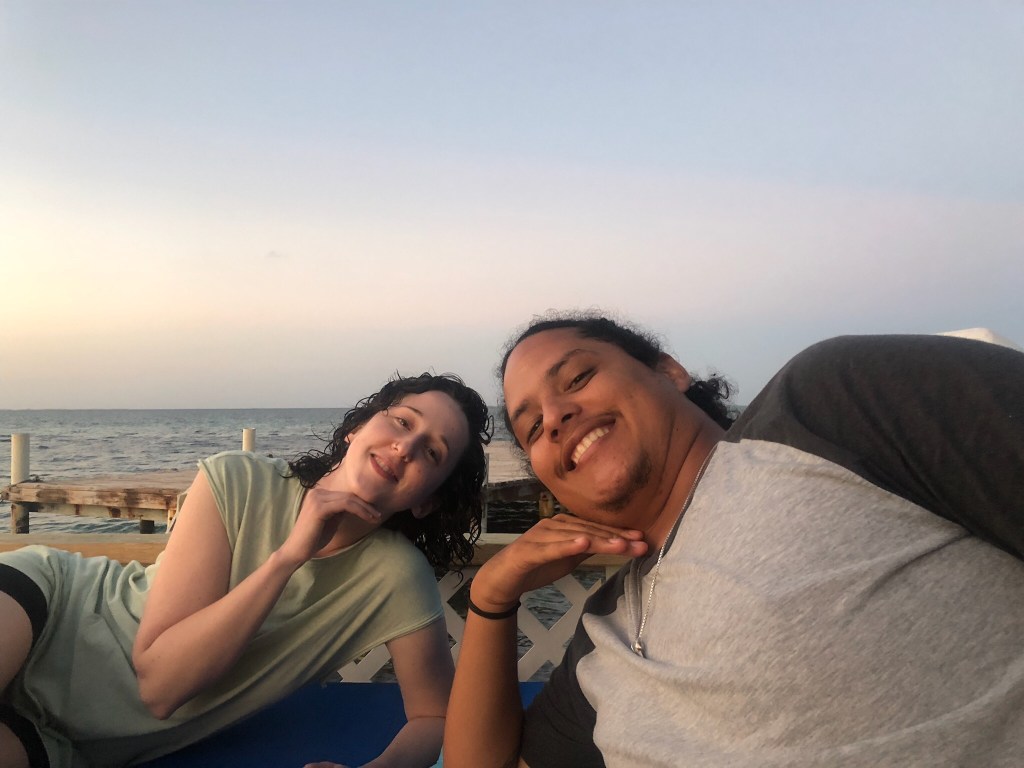
Ani and Ronny, a Belizean Marine Biologist who played Yahtzee for the first time with us. Ronny’s passions are sharks and rays.

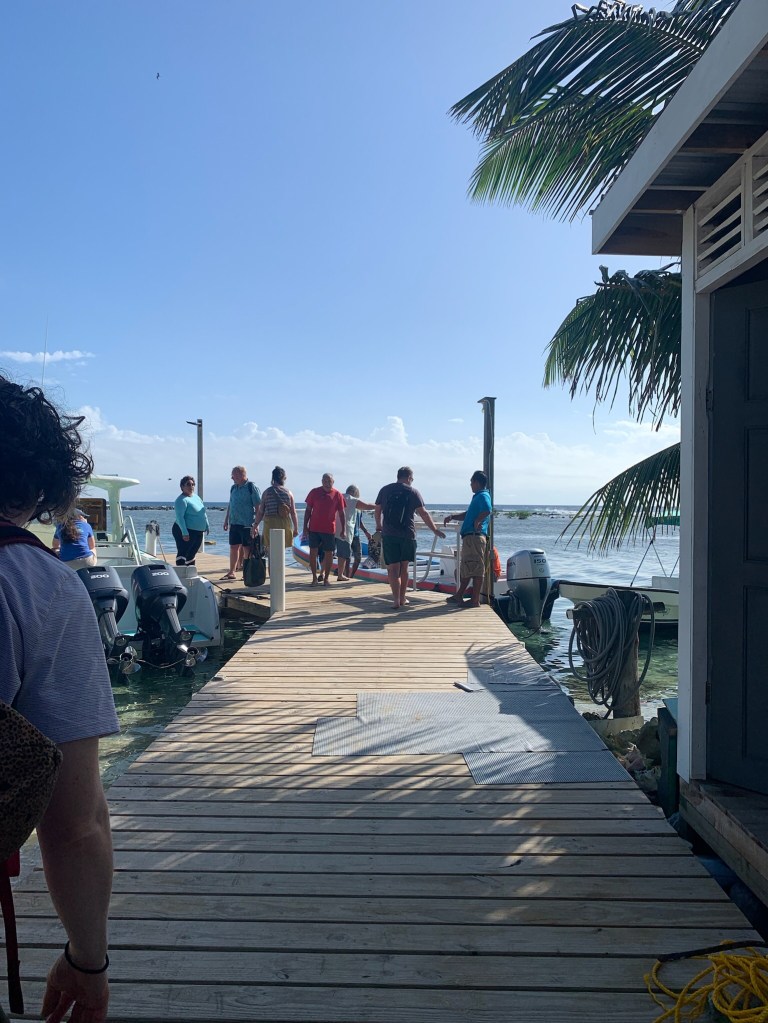
The 45-minute boat ride was bumpy. At one point, we hit the broad side of a wave and it felt like the boat might go over. Lots of white graced the knuckles of us travelers. We arrived at the Dangriga river dock at about 10:05 am and Teri and Kees had a 10:20 flight to catch. As we loaded our bags into the taxi van, our boat driver assured them, “Don’t worry. Five minutes is a lot of time and every moment is precious.” I appreciated hearing that, but it was not me who was late for a flight! Unfortunately, we needed to stop and get gas immediately, which here is about $6.50 per gallon, because we didn’t have enough to go the mile to the airstrip. Our taxi driver called her friend who works at the airport, but she wasn’t at work that day, so she called another contact and told them we were on the way and had them hold the flight. This is how we learned a lot is done in Belize, with friends calling friends and community contacts. Teri and Kees did make their plane, arriving at the airport 3 minutes before take off. They were headed to San Pedro, which is a busier island where they meet friends and play music every year.

Windy, bumpy boat ride off of Tobacco Caye to Dangriga.

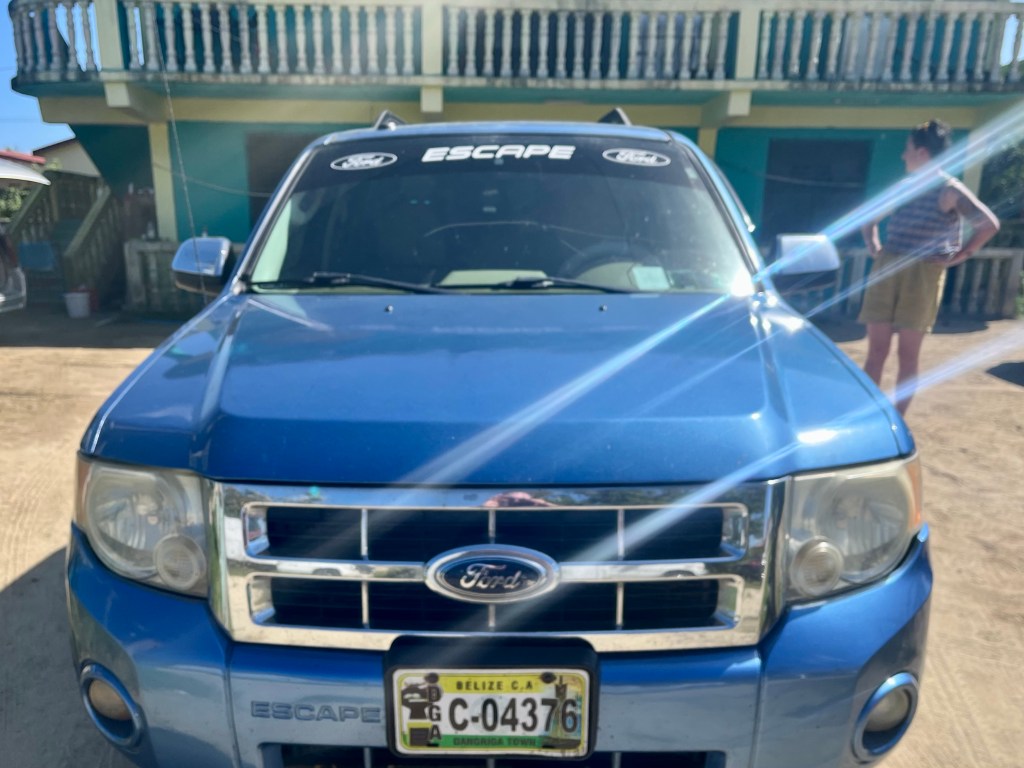
We decided to rent a car because it would allow us to get out into the rainforest of inland Belize. It turned out the rental car spot was someone’s house and he wasn’t there when we arrived. A mechanic working on a car assured us he’d be back soon. Not too long after, he did return and pull up our 2009 Ford Escape rental. The gas meter read less than a quarter tank, the check engine light was illuminated, the windshield had a giant crack right in the line of vision, and the process to release the rear hatch door required approximately 15 attempts before it would open. Magically, the price went down from the quote and we all agreed this was our best bet. So after we loaded up the back —and I do mean truly loaded, because Anicka and I each have two suitcases and Zoe and Skip both have one—we were off to the gas station, then to Hopkins.

Our rental vehicle while we survey if we could trust it. Can you see Anicka waiting inside for us just get going?

Being in Belize spurred our curiosity in the people and history of the region. Mayan people inhabited the area long before Europeans arrived. They make up the 11% of the population of Belize according to Wikipedia, and about 50% of people identify as Mestezo meaning Brazilian Hispanic. The country was colonized by the Spanish, French and then the British. British brought enslaved Caribbean and African people to work in the logging industry until the British empire outlawed slavery in 1833. Many of their descendants today identify as Garífuna.

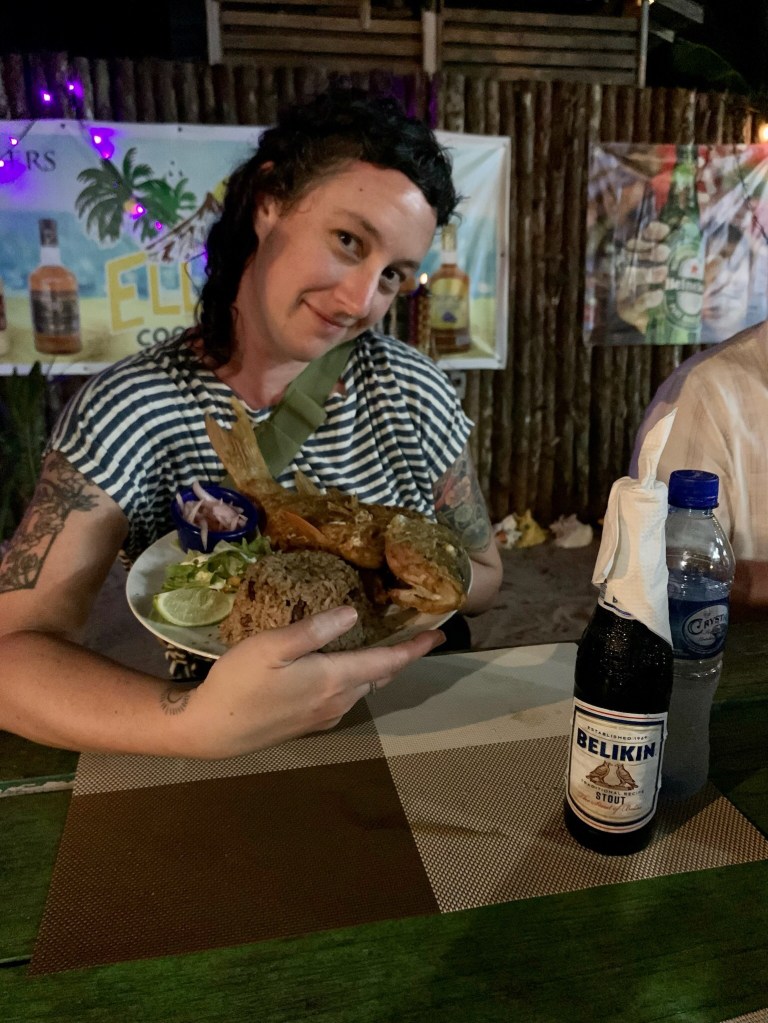
Whole fried fish, coconut rice and beans, and the only beer sold in Belize, Belikin

Once in Hopkins, we relaxed by the beach and went to Ella’s Cool Spot for a Belizian dinner of fried fish, shrimp ceviche, jerk fish, and curry. A Garífuna group of six or seven boys led by a spirited older man performed drumming, other percussion including on a turtle shell, and singing at the restaurant. Skip decided to try the pepper garnish on the ceviche…the habanero burned hotter than expected and he had numerous servers aghast. To quote Skip, “Habanero peppers will mark you cry! Thank you Shey for saving my life!” Luckily we had a Virgin Nutty Colada to cool his burning mouth.

Garífuna -Wiki

https://en.m.wikipedia.org/wiki/Garifuna

Tobacco Caye

January 23, 2023

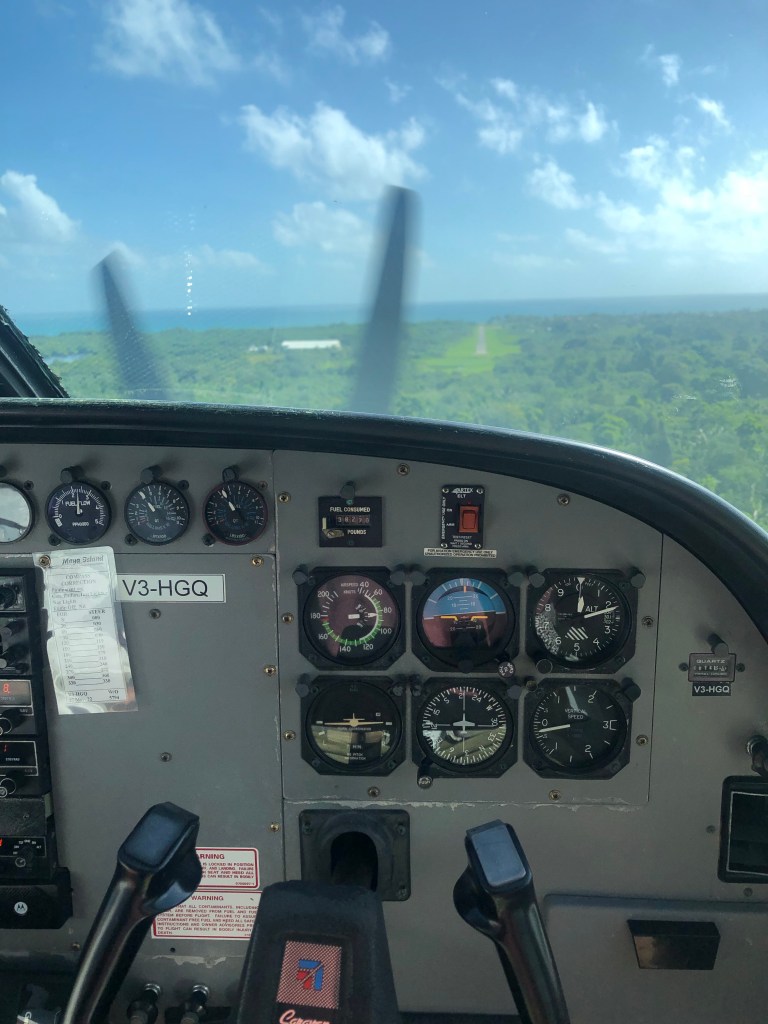
We took a 5am plane from Portland to Houston and another plane from Houston to Belize city. We overcame a hiccup upon arriving: we forgot a suitcase at customs. Luckily, the next morning it was waiting for us at the airport. Anicka said to the customs agent, “have you seen a small black suitcase left here yesterday?” and they said, “the one with the duct tape on it?” What a relief! We were so happy to have all our bags back as we waited for our single prop plane. The pilot invited me to sit next to him in the co-pilot seat for the flight. Off we went to Dangriga, a tiny coastal town where we met the boat that took us to Tobacco Caye, which the locals call Tobacco “Key”.

Final approach at the Dangriga Airstrip
“Full” flight

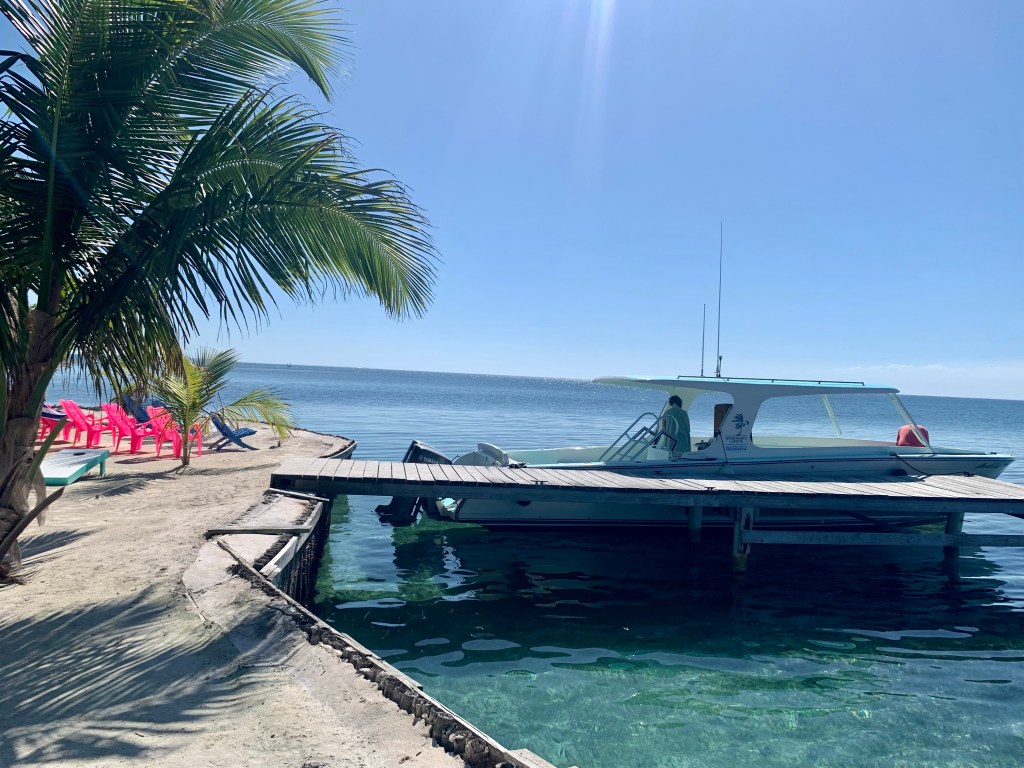
Tobacco Caye is a three acre island along the Belize Barrier Reef. We stayed at the Windward Lodge which is the only Belizean owned resort on the island. Quaint and charming cannot quite capture how sweet this little corner of the world is.

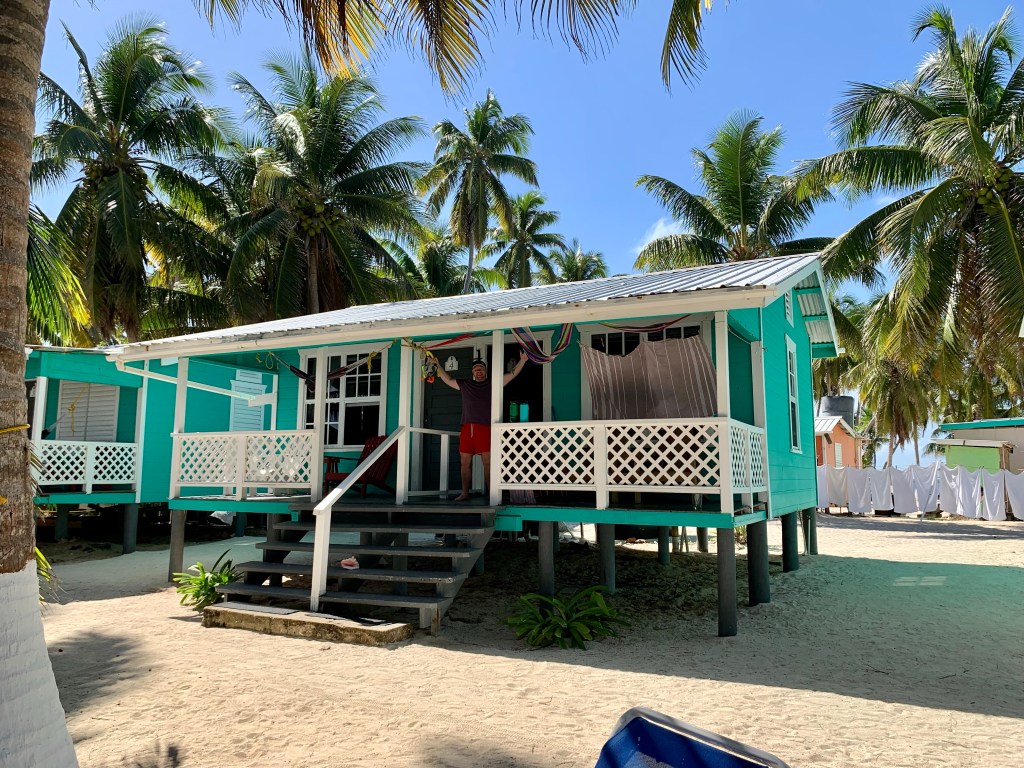
Our cabin, #4 and Skip!

When we approached the cottage on the beach looking westward into the Caribbean Sea, we were met with the friendly faces of Skip and Zoe- our Portland friends. They inspired us to join them on this adventure in Belize. We had a porch hammock and lounge chairs, inside was a full bed, and some shelving. We also had our own hot shower and a private sink toilet of our own. The place was humble in all the ways we didn’t mind and rich in all the ways we most desired. Three hot, delicious meals of fresh seafood everyday with a bell to ring us together, a Marine biology station steps away from our dining hall with a very sweet biologist-Ronny, and super genuine staff, fun and kind. It felt like summer camp in the most idyllic setting you can imagine.

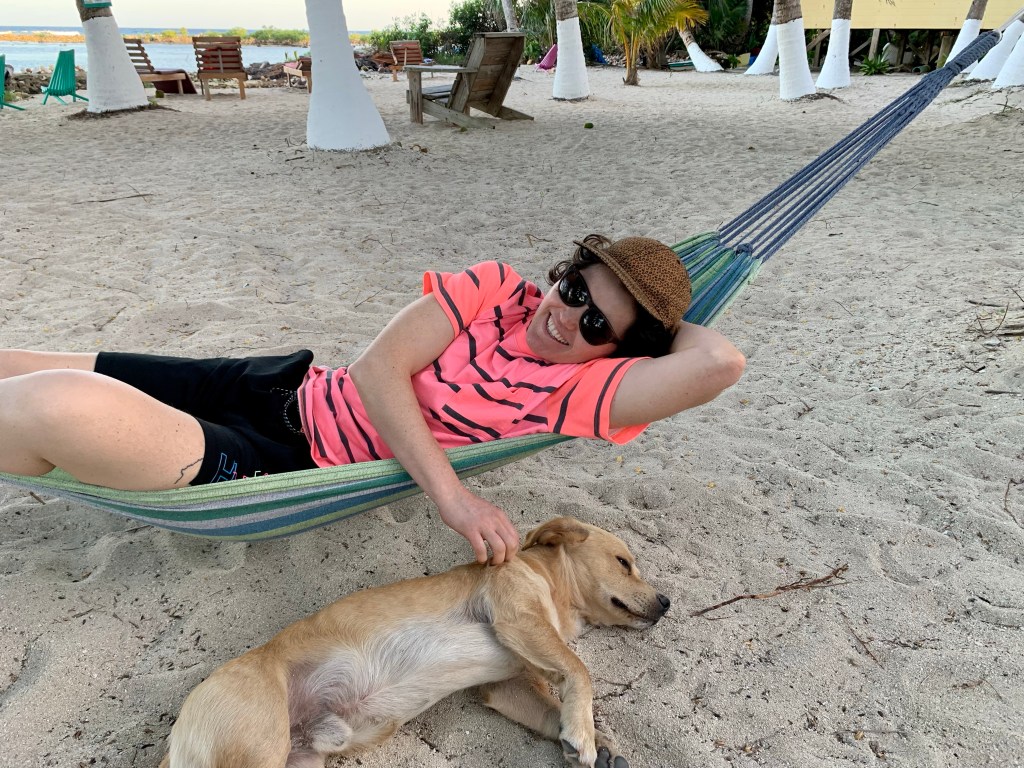
So many sweet island dogs. This one is Simba.

We enjoyed our meals and free time with Sam and Jordan- the couple who was celebrating their 10 year wedding anniversary (delayed to their 14th year due to covid). Their four kiddos were being cared for by grandparents. They kindly showed us how to play spike ball and also initiated a spirited volleyball game.

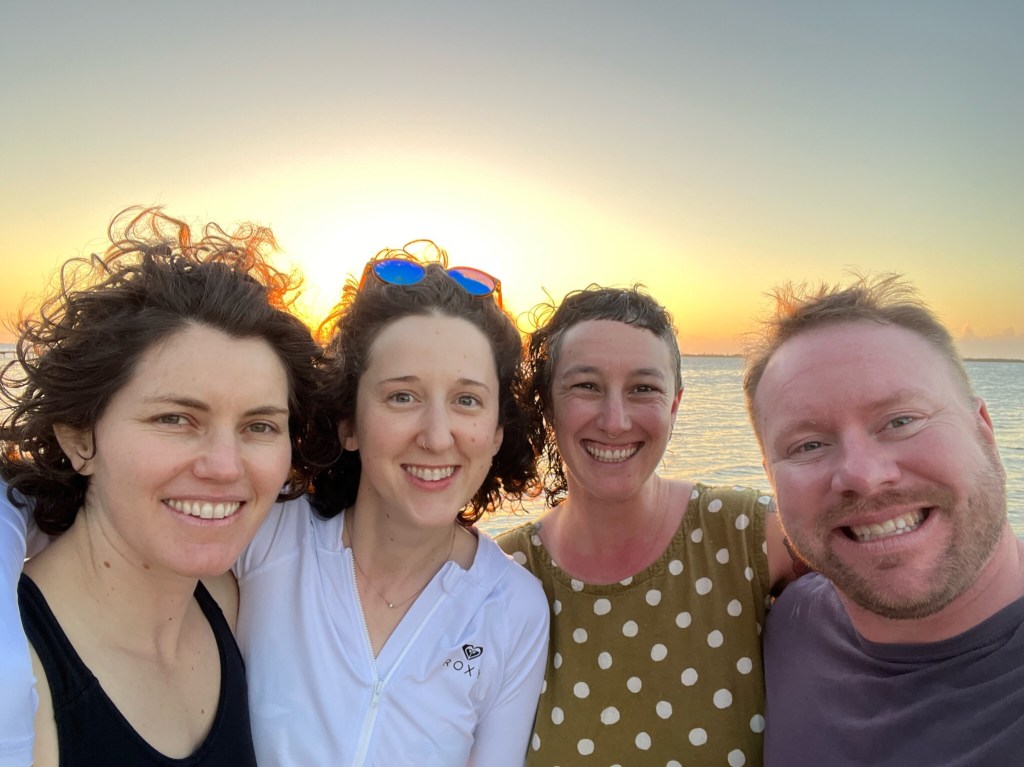
Skip and Zoe

We also had a great time with Windward Lodge regulars Teri and Kees. They have been coming every year for 18 years and had many great stories to share- including sinking a canoe and rescuing that same boat, as well as accidentally offering their infant grandchild as offering at a Mayan Temple ruin.

Stopping for lunch on Bread and Butter Island after snorkeling
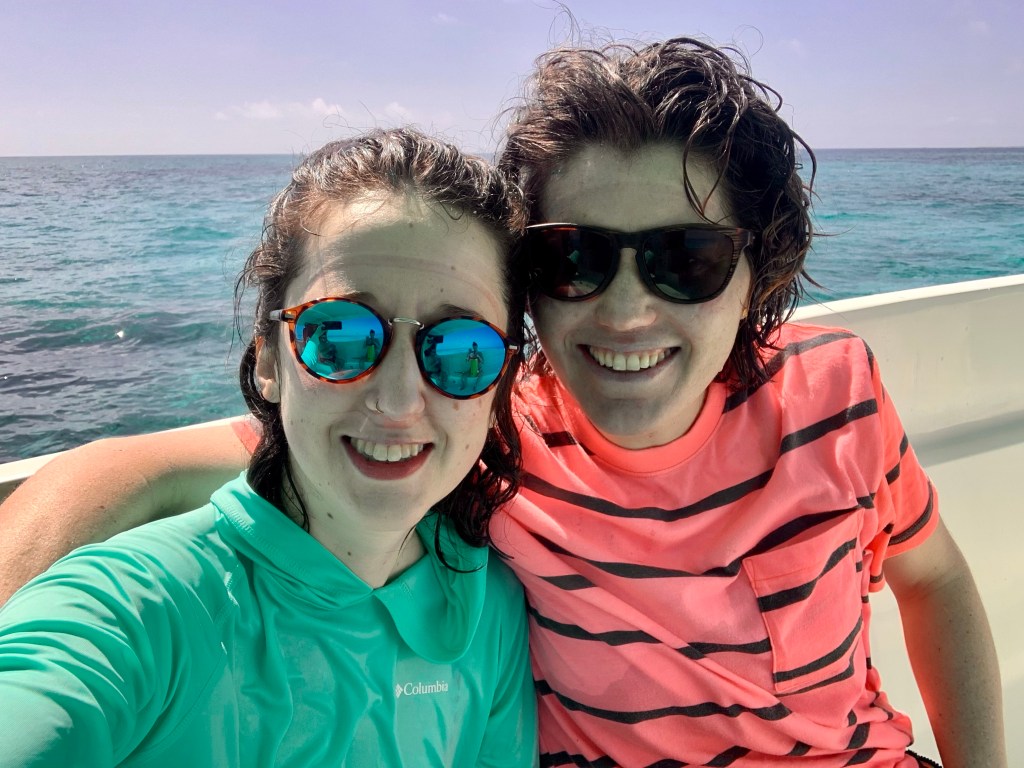
There were spots where the water is as blue as Anicka’s shirt!

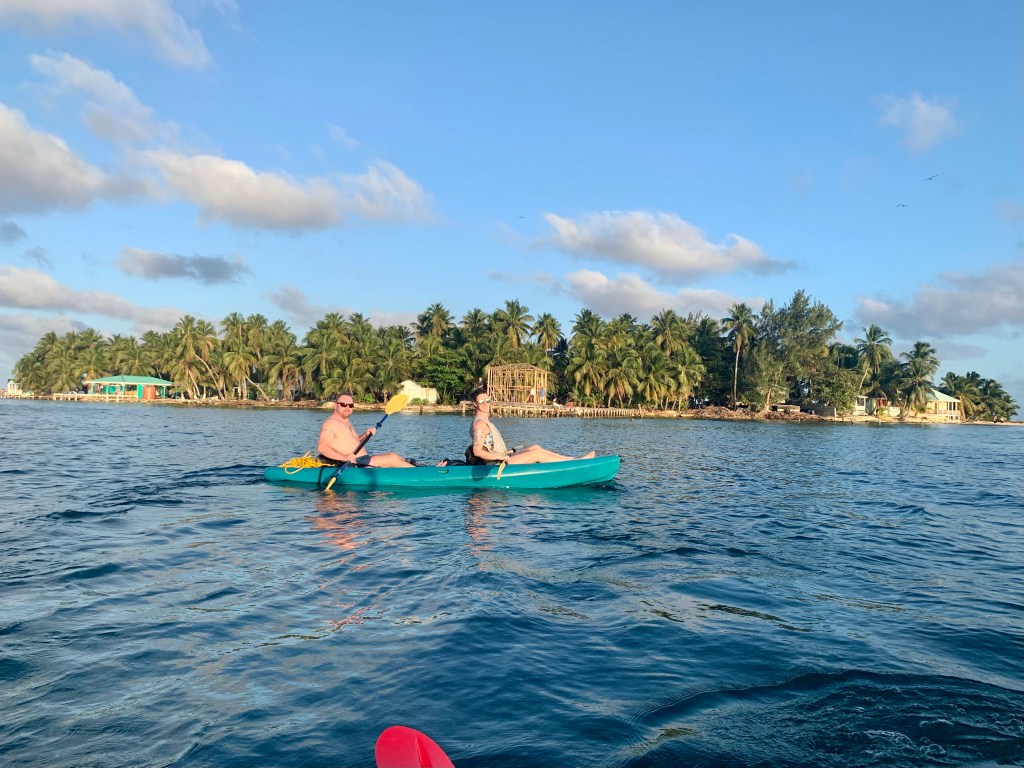
We did night snorkeling and saw a shark, octopus, and an eel, who is called Derrick , as well as many other creatures. We kayaked around the island, lounged in hammocks, danced at the very tiny beach bar, and generally enjoyed our time. We spent a full day snorkeling at various spots along the reef, marveling at the beauty of the coral and vibrancy of the sea life in this part of the world. The lodge is run by a family: Collin is the boat captain, his wife Gorlee runs everything, and their son Triton played in the calm surf as his grandmother watched. The staff guided us on snorkeling tours, fed us delicious meals, hit coconuts down from the trees and chopped them with the machete so we could drink from them. It really was an incredible time there. We have now arrived in Hopkins and will start our jungle adventures, but a piece of our hearts will stay on Tobacco Caye.

Prelude

January 22, 2023

Here we are, descending into Belize City, our customs forms completed. The pilot has told us that it is 90 degrees on the ground. What a change from the snowy, wet weather we had in Portland yesterday. Anicka will have to shed her jean jacket and me my thick sweat pants. We will join our friends Zoe and Skip tomorrow on the island of Tobacco Caye. This tiny island has a beach hut and beach side seats waiting for us: a tiny airplane, “puddle jumper” ride away from Belize City. After a few days there, we will hopefully have caught up on sleep and then head to Hopkins and finally San Ignacio. After 11 days of vacationing in Belize, we head to Oaxaca where we plan to live for three or four months-attending language school and Anicka arranged telework.

The past few months and weeks have been rich: highs of sweet gatherings, births, holidays, as well as tears of overwhelm and heavy hearts- already missing our beloved community. We both quit our healthcare jobs, packed up our lives with lots of help from friends and family, and said farewell to the people who bring light into our lives. We deconstructed Anicka’s loom and then set it up in a basement, some of our boxes are being stored in a non functioning sauna, and Anicka’s sister did the brave work of helping us dispose of all condiments who called our fridge home. We are off on an adventure.

How did it start? I recall riding my bicycle home from work about 2 years ago, and thinking about learning Spanish, immersion, travel. What about Anicka, I wondered as I watched the orange horizon of sunset. She had another year after me to complete her scholarship commitment. Would she want to go on such an adventure? Yes, she said. And Anicka is as genuine as they come and together we have made it happen.

Our home is rented to a sweet little family, Gracie will be joining us in May, and now we get to enjoy this time together. We will do our best to share our adventures with you all. Love to the web of connections who have brought us so far.

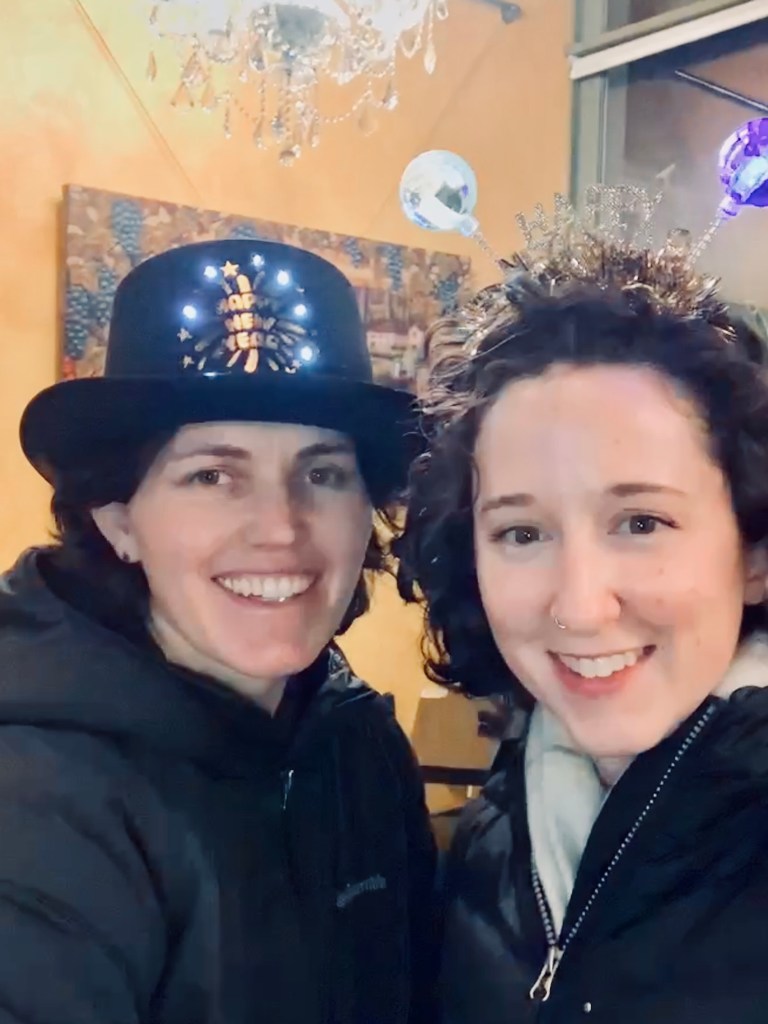
New Year 2023 at Ciao Vino in Fort Collins, Colorado.