January 27, 2023
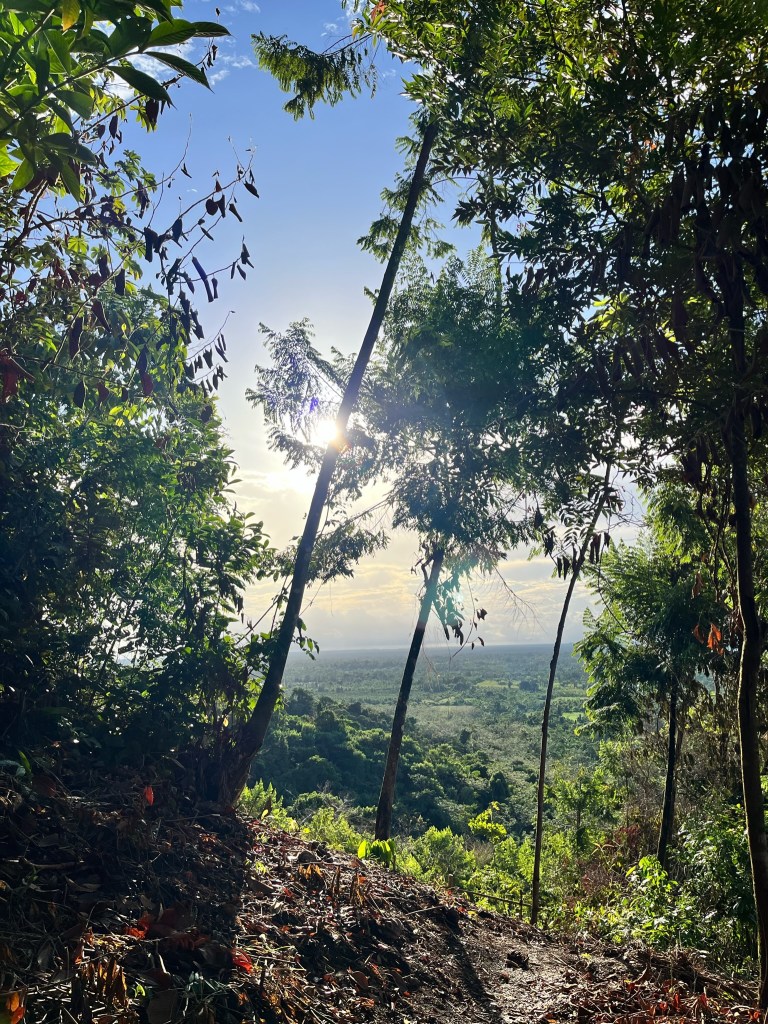
We woke up early our first day in Hopkins and headed toward the jungle in the dark and rain. As the sun rose, the rain eased and we saw the morning routines of the Belizean people. Many people bicycle to their school bus and to work. They carry all their tools- chainsaws, machetes— and big bottles of water with them while bicycling. We also saw Old Order Mennonites driving their horse drawn carts to sell fruit and veggies at busy junctions. We reached the town of Red Bank and met Raul, our guide to see the scarlet macaws. We are a bit later than he had suggested and so he was antsy to head out. We followed him on his motorcycle in our Escape to a trailhead. We were beginning to trust our well-traveled vehicle, despite the sounds in made as we went along the red dirt road.
Raul simply asked us if we would be ok with walking in the flat jungle, then climbing. We agreed and at about 7am followed him into the lush, green tangles of the rainforest. Raul navigated along an interwoven network of trails through the warm, humid forest. We saw a tapir track, heard toucan, and marveled at the industrious leaf cutter ants, carrying their tiny green triangles up the steep slope.
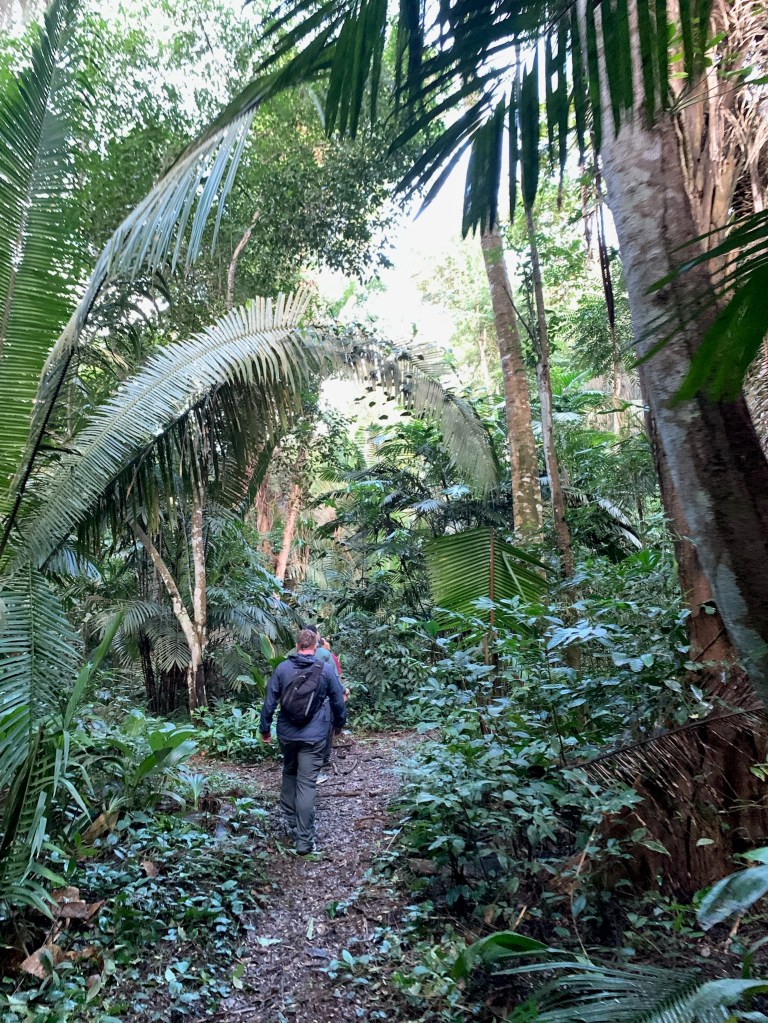
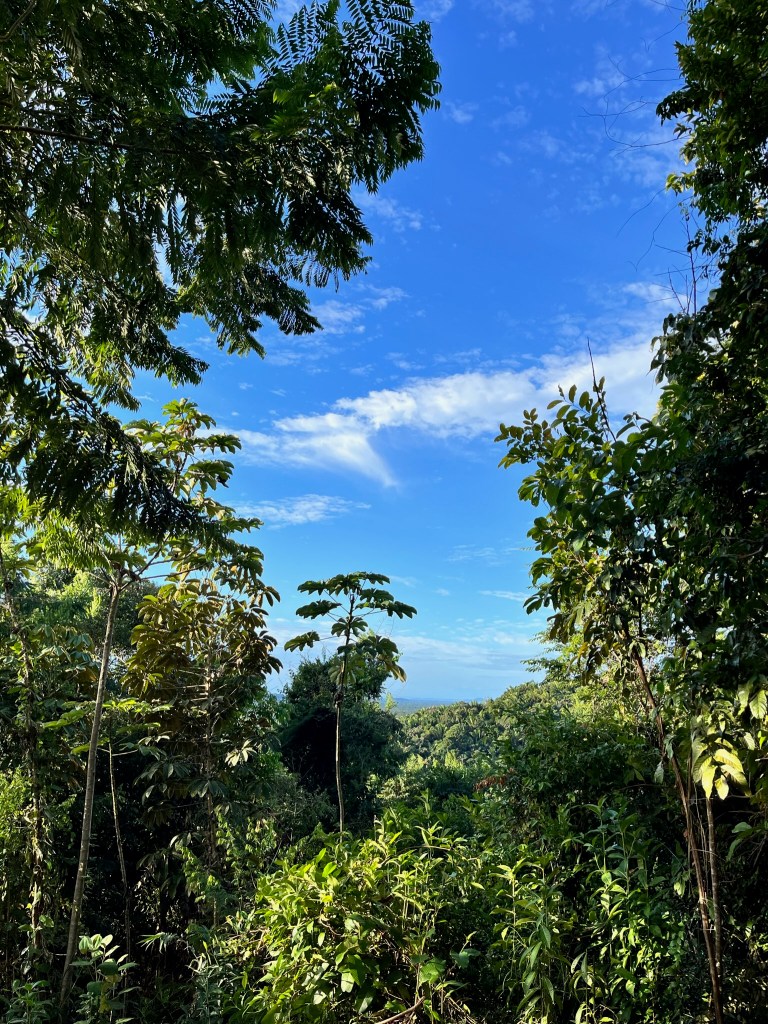
Up, up, up we followed Raul. After 20-30 minutes of hiking, we started hearing the harsh calls of the scarlet macaws. We came to a clearing where an older couple and an older guide was watching. They smiled and left a few minutes after we arrived. I felt disappointed: worried that we had missed the birds. Raul reassured us that we had a few hours to look for them as he handed us binoculars.
About 300 scarlet macaws live in western Belize. Many of them feed and mate in the early spring near Red Banks, then go deeper into the Jungle at the Belize-Guatemala border to rear their young. Poachers pose the biggest threat to the population: they climb up and steal eggs, then incubate them, hatch the birds and sell them into captivity. Sometimes, guides like Raul or others interested in protecting the birds go and camp under the trees to protect from such plunder. They are prized for their colorful feathers, which ancient Maya rulers used in ornate headdresses. You can tell the age of the scarlet macaw by the skin around their eyes- just like for us, it get wrinklier with age. Macaws live up to 50 years in the wild. The males and females have the same coloring and they weight only about two pounds, despite being three feet long and having a wingspan of the same length.
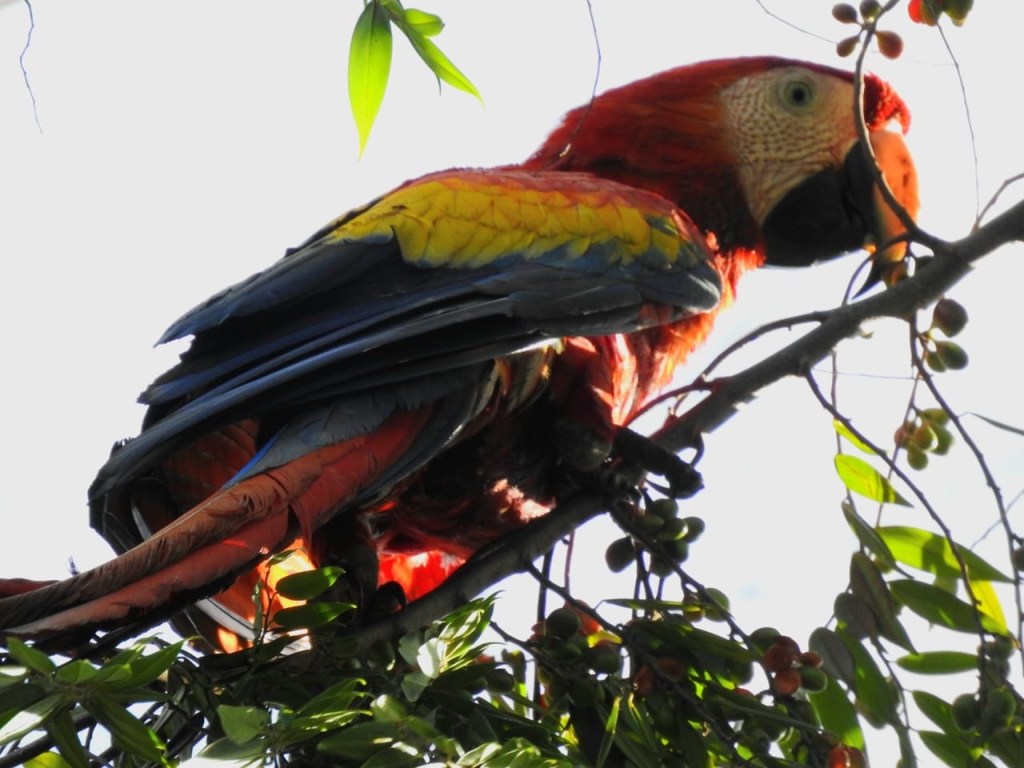
Photo credit: Raul Tec
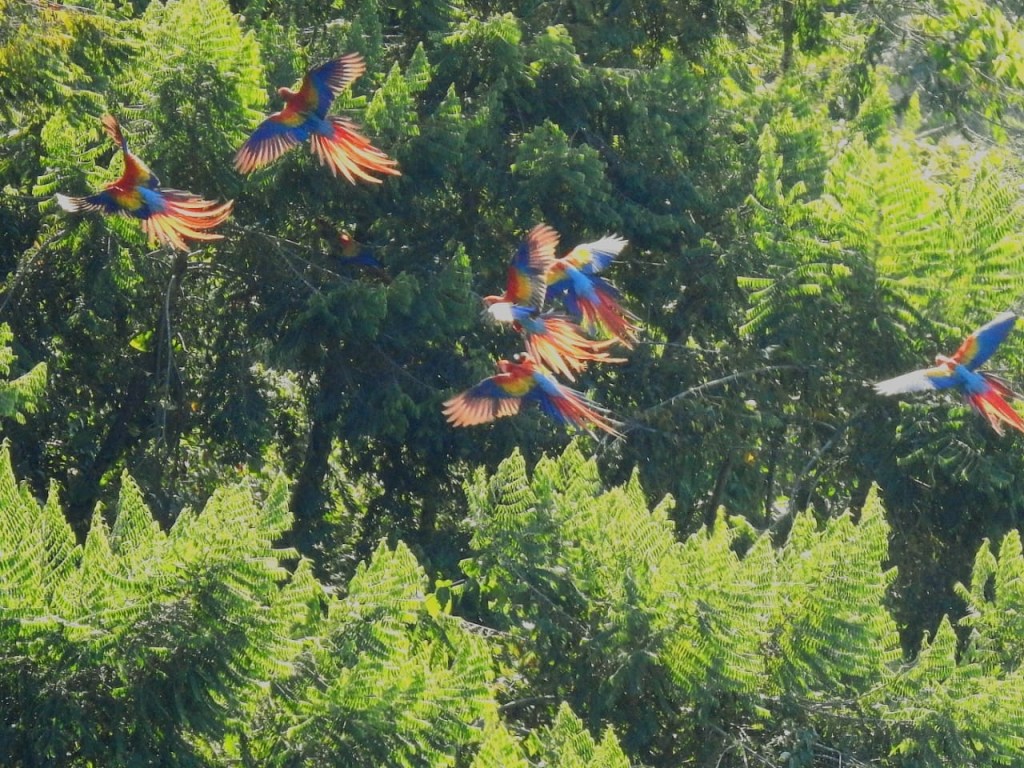
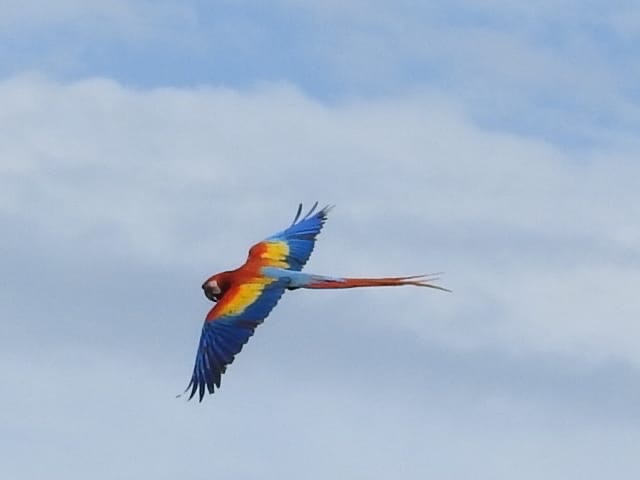
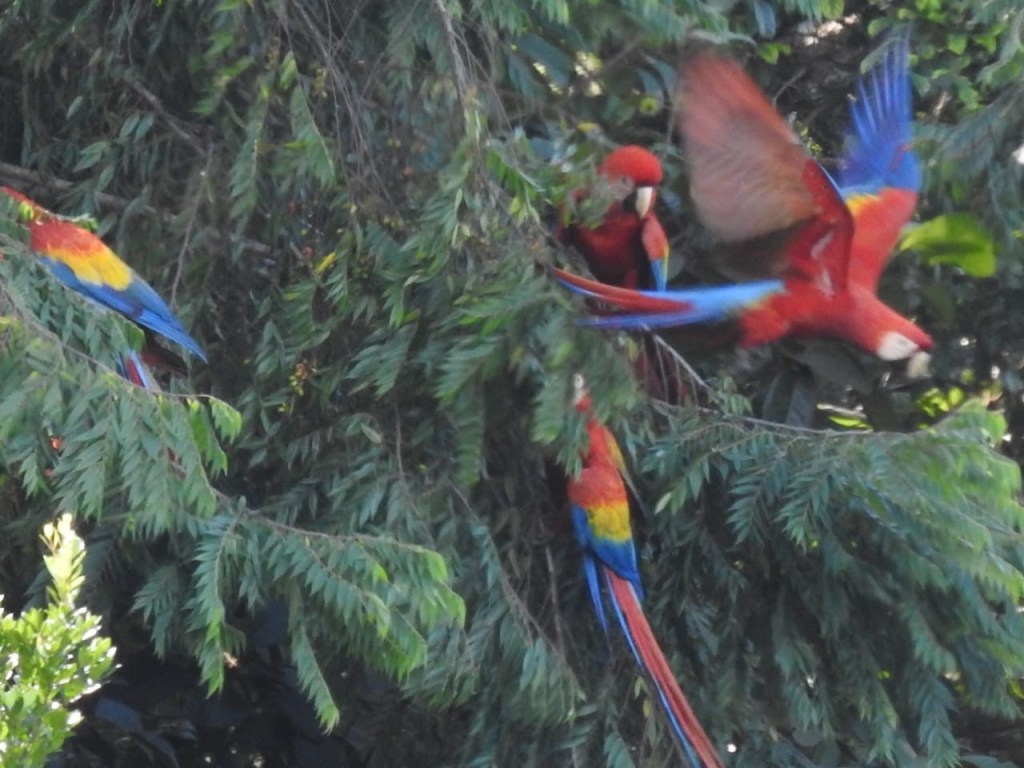
Over the next few hours, we would listen for the cawing, chase them to where they landed and watch them. Then repeat. Raul’s passion for the birds inspired us all to run behind him up and down the trail. It was very thrilling to see the birds right above us and in flight. When the mating pairs, who stay together for life, would turn and twist synchronously in the air, their colors flashed against the green forest backdrop. It delighted us all. I was surprised at my own amazement.
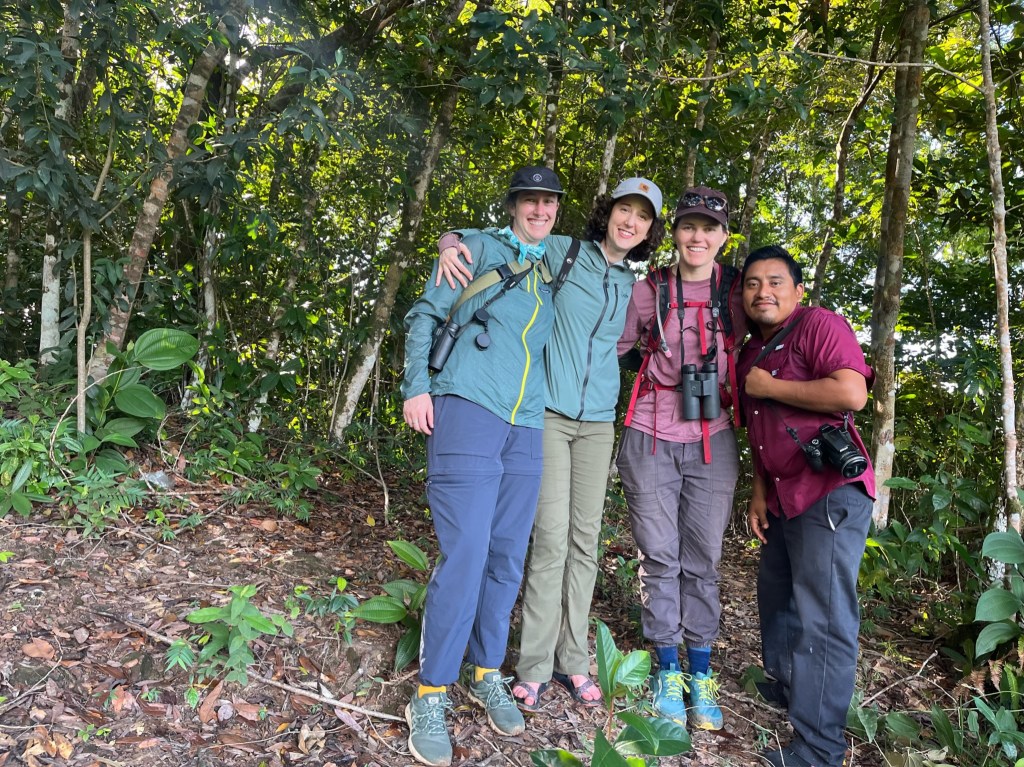
Raul also told us about the town of Red Bank. Maya people from the nearby San Antonio established it in the 1980s. Some of them farm tubers, like cassava and yam, do tour guide work, or work in a trade. When Belize established a forest reserve nearby, the indigenous Maya people living on the land were forced to move to Red Bank.
As the sun climbed higher, our time in the jungle with Raul and the Scarlet Macaws ran out. We descended to the car hungry and tired. After a quick stop to help push a tourist van, with tiny wheels and tires, out of the mud, we left Red Banks and the macaws.
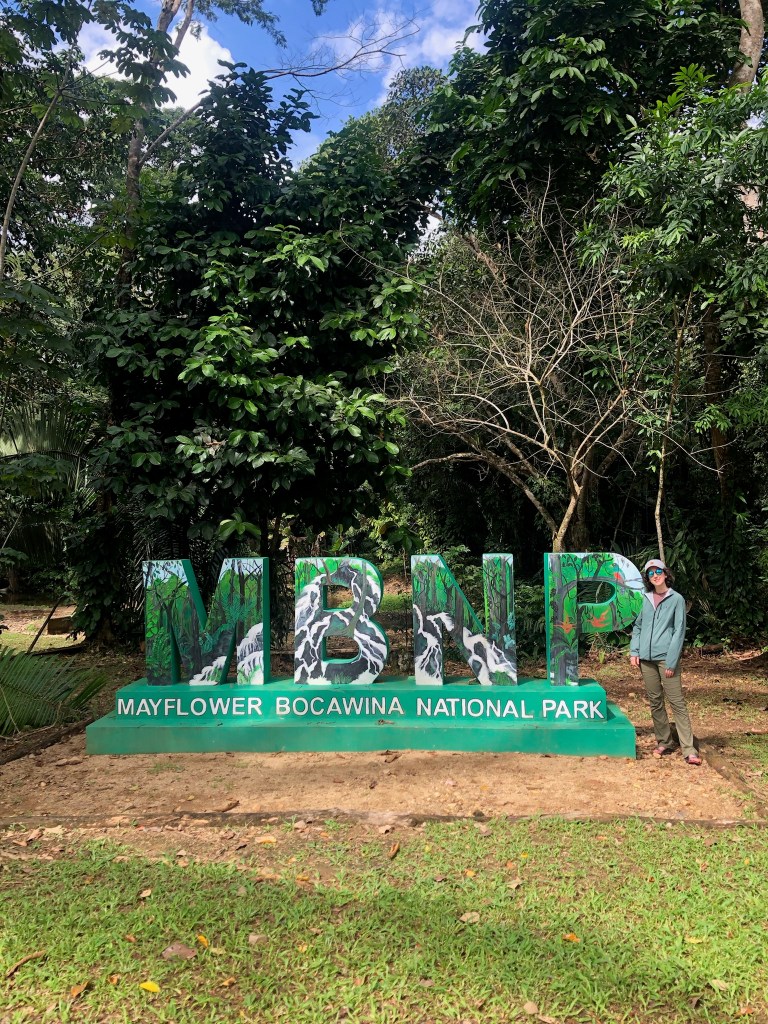
As if one hike wasn’t enough, we decided to head to Mayflower Bocawina National Park to do another. The park ranger oriented us and advised us to watch for two species of venomous snakes including the Mexican jumping pit viper. He sees this snake on a daily basis, he told us. He also showed us three recent botfly bites, bites that turn into larva moving under your skin in about two weeks. Despite initially planning for an easy hike, we couldn’t help but follow the trail towards the “steep” Antelope Falls with his prompting. We were all sweltering in our full body nylon and polyester, trying to prevent getting any botfly bites of our own.
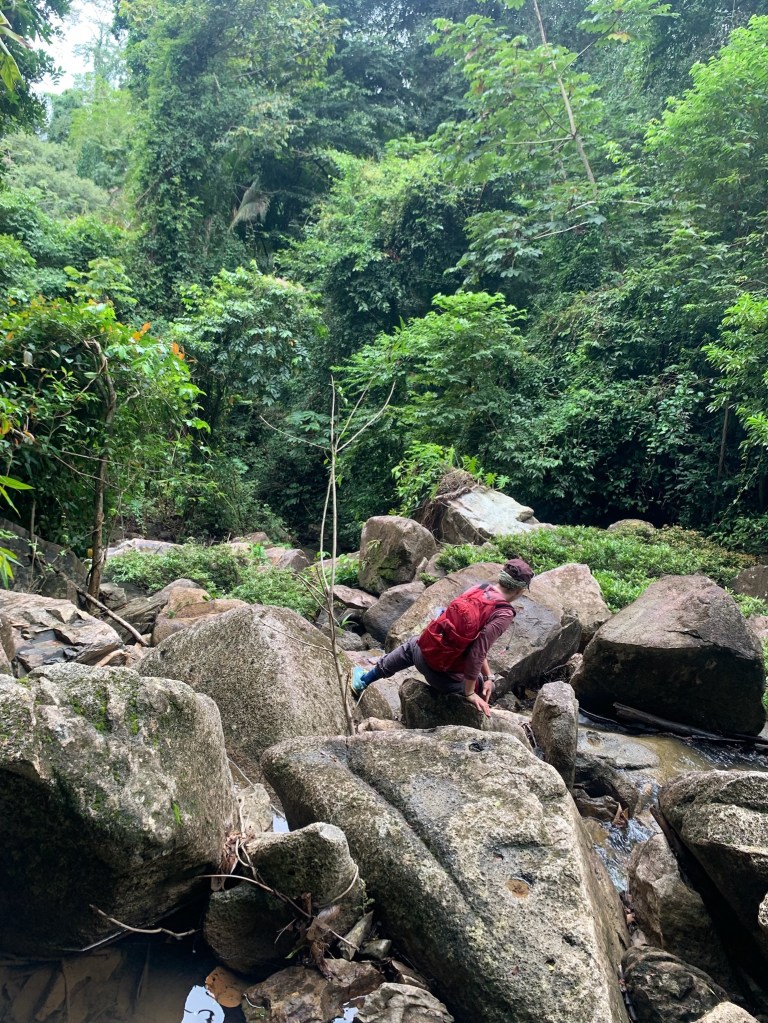
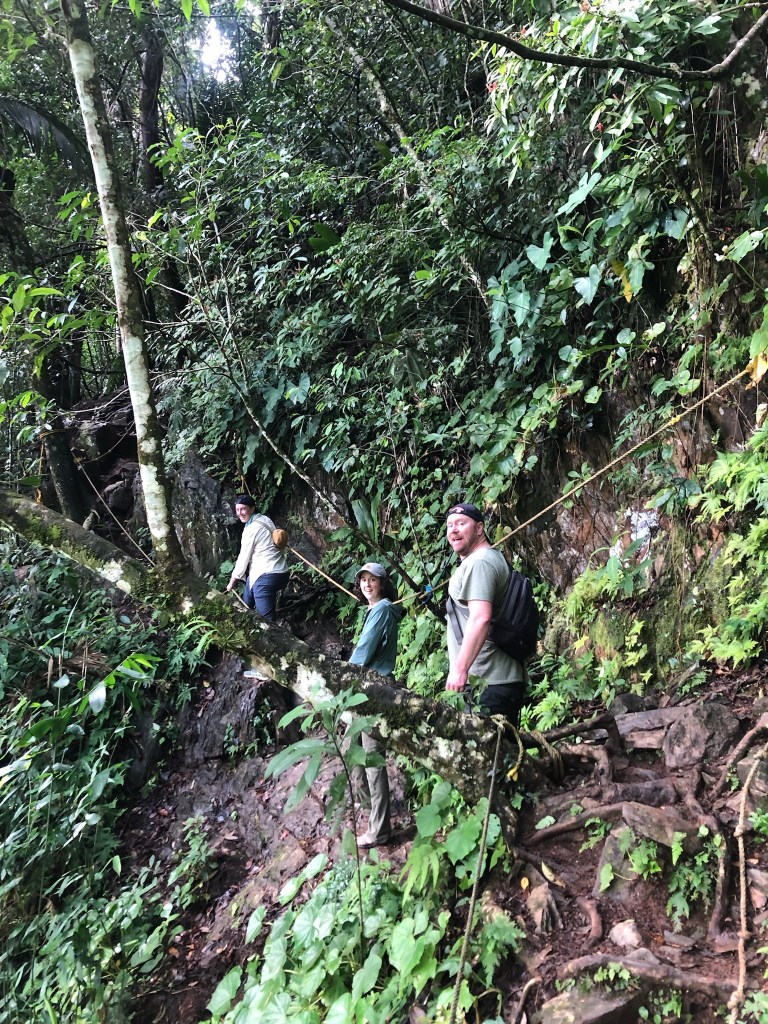
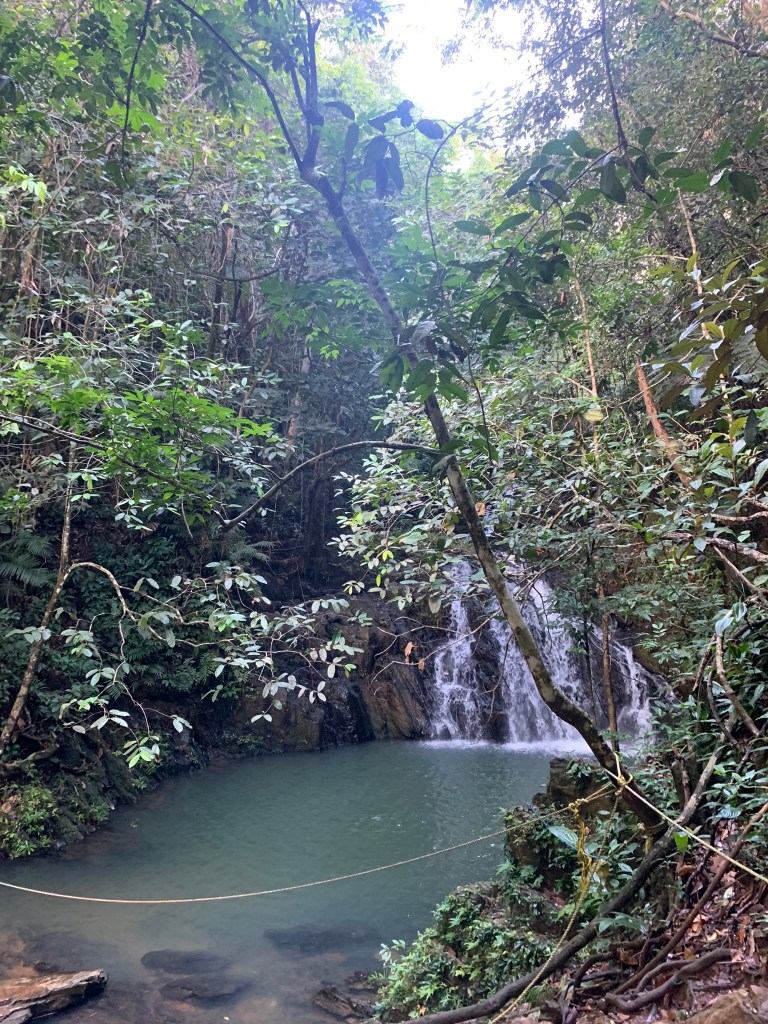
Walking through the lush jungle was an adventure in itself. Huge palms and thick vines were everywhere. We passed a group who had repelled down the falls and they told us, “You still have a long way to go. You are almost to the hard part.” We came to the first falls and were winded, sweaty, tired, and humbled by the view. The next 30 minutes led us nearly straight up, grasping ropes along the trail to prevent falling down the mountainside. We scrambled up and over roots, scooted on our butts, and pulled ourselves over to the top of the waterfall where we found ourselves alone at a natural pool. We were so ready to strip down and jump in, marveling at our surroundings and trying to accept that this is our reality. It was one of the most incredible experiences we had. The water was cool and refreshing and gave us energy to make the trek back down. The climb down, Shey called it the “poor-man’s repelling”. Skip inspired us to take the time to swing on a vine along the way.
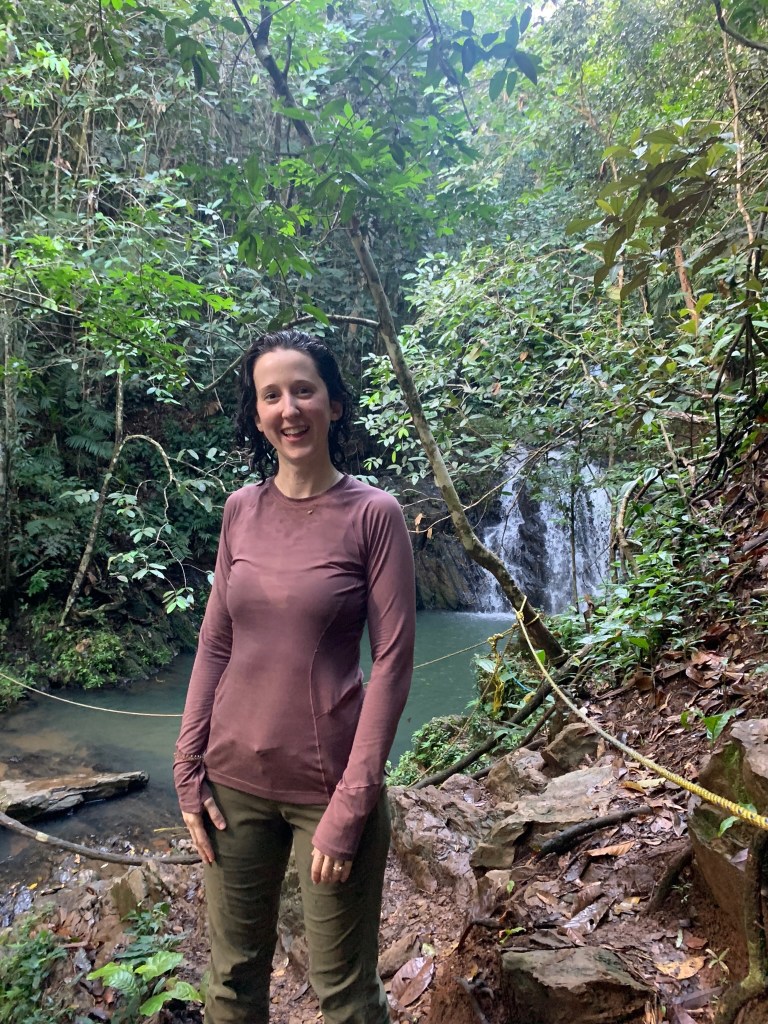
We’re still waiting to see who got the first botfly bite, and we will all owe them a drink.
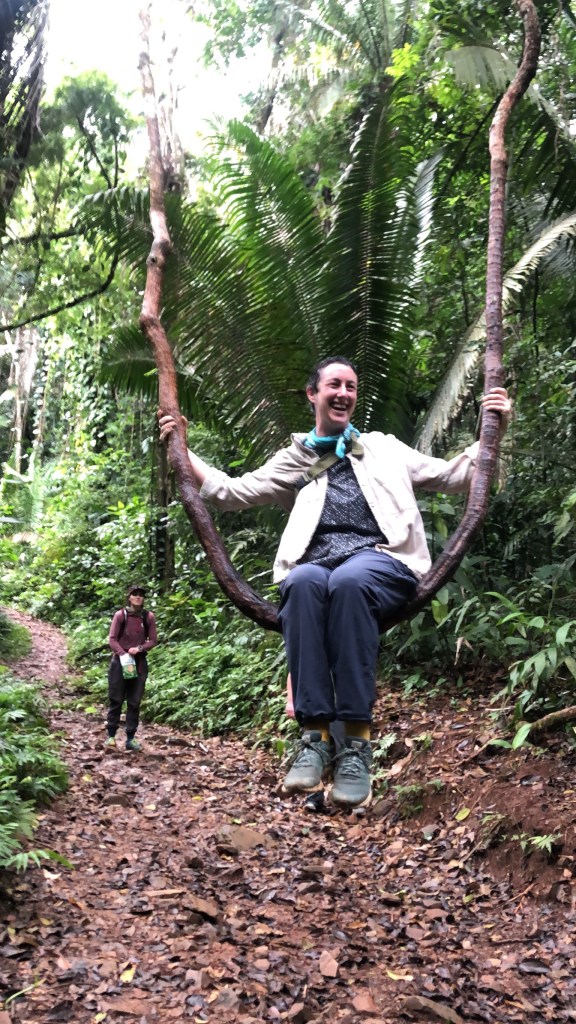

 Anicka and Shey travel while gay
Fantastic! Thanks for the great update!
>
LikeLike
Wow! Beautiful birds, so cool to see them up close above you in the forest trees, and in flight over the plains . And the hikes with vegetation and swimming and views, amazing!
LikeLike
Great adventure!
The rain forest is such a source of life for our Pachama!
Your visit to the jungle reminded made of Costa Rica.
Anika I hope your feet were ok after all that workout wearing sandals!
I cannot wait to hear your experiences in Oaxaca!
LikeLike